Published December 23, 2021 06:00AM
Originally posted onTriathlete
How to Go From a 5K Runner to Triathlete
For anyone who’s ever stood at the finish line of a 5K, 10K, or half-marathon, and asked “what’s next,” we have the answer.

(Photo: Getty Images)
Let’s say you’ve run a few 5Ks and now you’re looking for a new goal that’s challenging but attainable. A triathlon might be just what you need. Like running races, triathlons can vary in distance and difficulty, so don’t be intimidated just because you’ve watched the Ironman World Championship. Triathlons come in all shapes and sizes, and are a great “next step” in your athletic adventure. In most cases, if you can run a 5K, then with the right training you can finish a triathlon. Below we break down the basics of going from a runner to a triathlete.
Triathlon Distances

Triathlon events range in distance from so-called “super sprint” (typically a 0.5K swim, 10K ride, and 1.5K run), up to a “sprint” (0.75K, 20K, 5K), Olympic or “international distance” (1500m, 40K, 10K), to half-iron or 70.3 (1.2mi., 56mi., 13.1mi.), iron-distance (2.4mi., 112mi., 26.2mi.), and even beyond. If those distances are hard to digest, we’ve broken down the average finishing times below.
| Triathlon Distance | Swim Distance | Bike Distance | Run Distance | Average Participant Finish Time |
| Super Sprint | .5K | 10K | 1.5K | :45–1:00 |
| Sprint | .75K | 20K | 5K | 1:15–1:45 |
| Olympic | 1.5K | 40K | 10K | 2:30–3:30 |
| Half-Iron | 1.2mi. | 56mi. | 13.1mi. | 5:00–6:30 |
| Iron | 2.4mi. | 112mi. | 26.2mi. | 10:00–14:00 |
Pick Your Event
At the risk of stating the obvious, for most people going from runner to triathlete the best approach is to start small—both in terms of distance and the size of the race. Find a local race that doesn’t require travel and doesn’t have a big field. A smaller race will have a more relaxed atmosphere, with fewer complicated processes, and a less crowded swim (trust us, the last one is important, and you’ll see why below).
Hit the Store (But Don’t Break the Bank)
While triathlon lacks the simplicity of running when it comes to equipment, you also don’t need to buy all the newest, latest, and greatest for your first triathlon race. You will need some new gear for cycling and swimming, but don’t feel the need to go overboard: You don’t need a state-of-the-art tri bike and every imaginable aerodynamic accessory for your debut.
RELATED: 15 Must-Haves: Essential Beginner Tri Gear
ADVERTISEMENT
Swim Tips for Runners
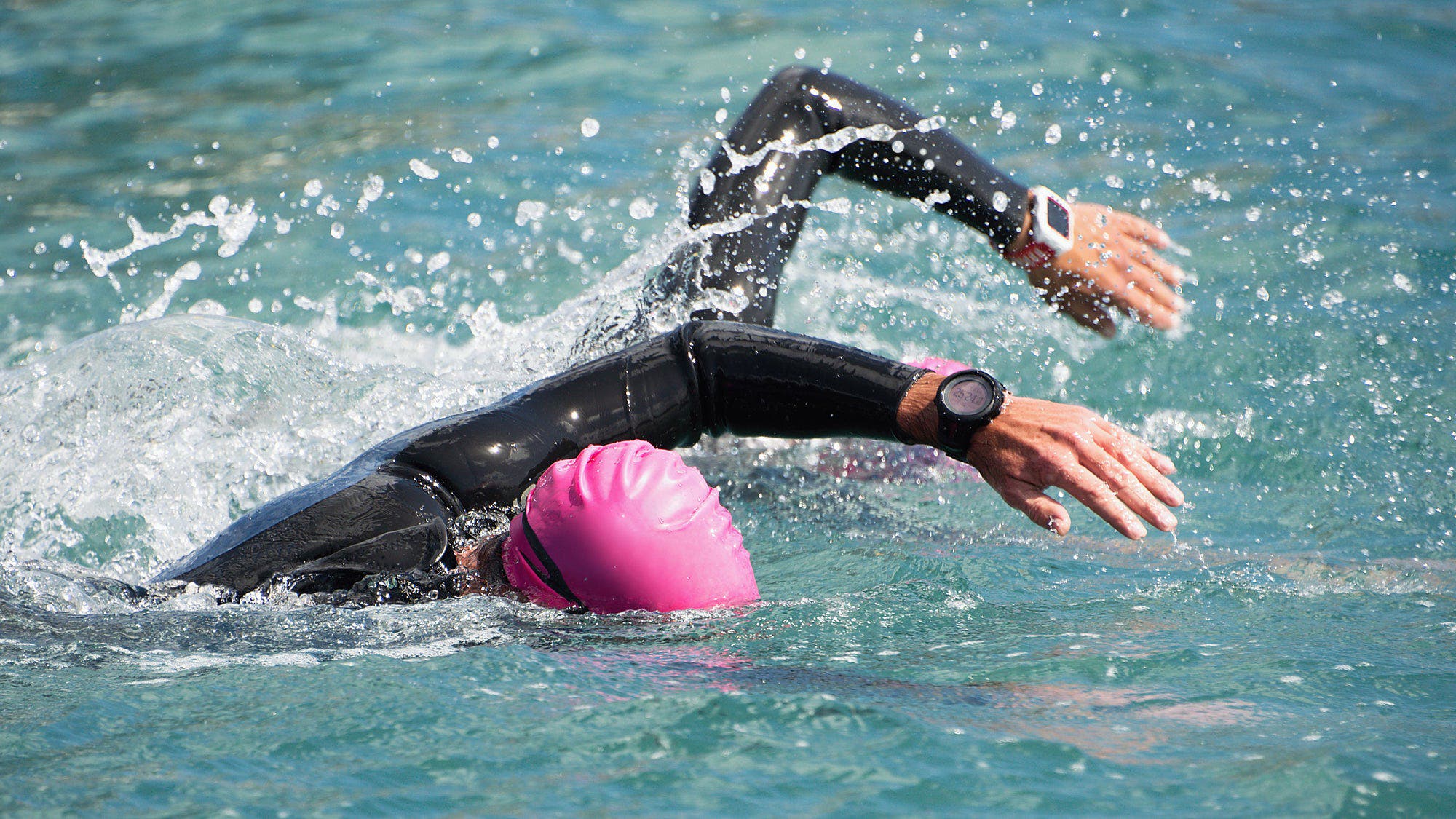
Unlike running, you can’t just head out the door and swim anywhere you want, so first you’ll need to find a pool that’s appropriate for lap swimming. Be sure it has hours that accommodate your schedule, and find out how long the pool is for each lap—this will help you with your workouts and not all pools are the same. (Most lap pools in the U.S. are 25 yards or occasionally 25 or 50 meters.)
While you’ll do most of your training in a pool, you should be sure to get some open water practice in as well. Unlike a pool, there won’t be a line at the bottom for you to follow or lap lane lines, so you’ll want to practice sighting in order to avoid making the swim longer than it has to be. You should also practice breathing in either direction. If race day conditions are calm, by all means breathe on whatever side is most natural for you, but if there’s a bright sunrise or a little current, you’ll want to be competent breathing to either side.
More swim tips:
- The Triathlete Guide to Going from the Pool to the Open Water
- Beginner’s Luck: The Mystery of Open-Water Sighting
- Why (And How) to Learn to Bilateral Breathe
Make the Swim Easier
For most first-time triathletes, the swim is the most intimidating discipline, and understandably so. If you’re nervous about the swim, there are strategies you can use to help you gain confidence.
When looking for your first race, opt for one that has a swim in a pond or lake rather than the ocean. (There are even some triathlons with pool swims if you’re looking to try the sport on for size but lack confidence in open water.) Just like a running race, in a triathlon the faster athletes will line up toward the front. In order to avoid too much contact with the other swimmers, you can opt to start the swim toward the back of the field. You can also swing wide of the buoys—the things that marks the swim course—when making your turn; this will keep you out of the scrum of people. Finally, keep in mind that the swim is closely monitored by safety officials whose job is to take care of you if you’re in distress.
Tri-Specific Swim Gear
Unless it’s prohibitively hot, a wetsuit can be a real asset for just about any triathlete, but more so for beginners who come from running. Not only does it keep you safer, it helps you go faster. By keeping your runner legs afloat, it lets you minimize your kick and save your legs for later. With your wetsuit, be sure to pick up some anti-chafe balm.
RELATED: Ask a Gear Guru: What’s the Best Wetsuit for Beginners?
Also, while you don’t need open-water-specific goggles, a couple pairs of goggles (for different lighting conditions) with a wide field of vision are a great idea. The more you can see as you swim, the more comfortable you’ll feel with less claustrophobia in murky water.
RELATED: Ask a Gear Guru: Which Type of Goggles Should I Wear Today?
Cycling Tips for Runners
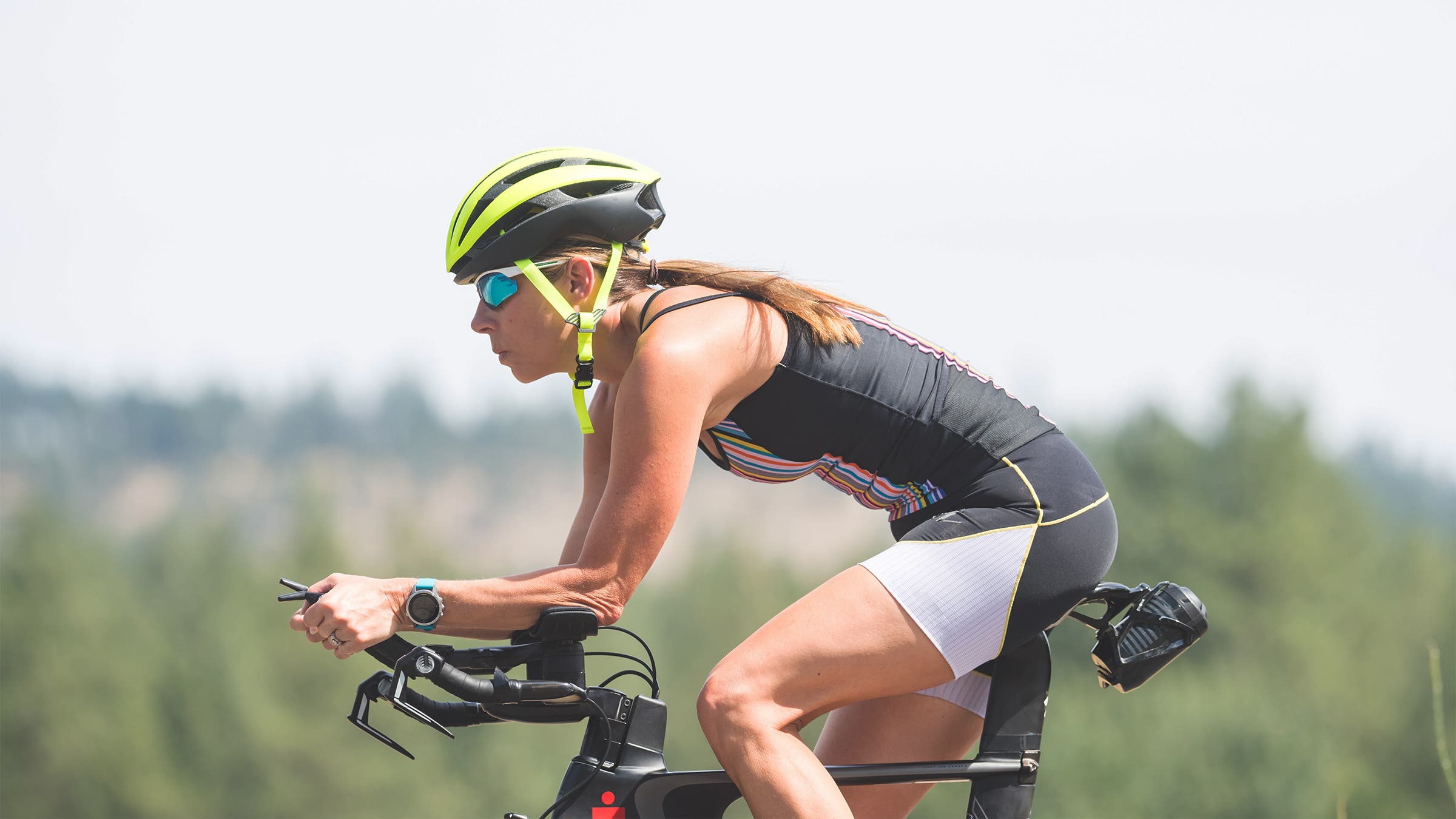
Many runners already know that cycling can be a great complementary exercise to help them improve performance or to stay fit when nursing an injury. Even if you haven’t ridden in years, the good news is that riding a bike is like…. well, like riding a bike. Still, as a runner-turned-triathlete, there are a few things to keep in mind to maximize your riding potential.
Shift Early, Shift Often
One advantage to riding versus running is that you have multiple gears at your disposal—yet many newer riders shy away from using them to their fullest. If you’re on a flat, windless course, that’s fine. Otherwise, shift early and often. While the natural tendency may be to work harder on climbs and coast on descents, for a rolling course that may not be the best use of your energy. Try shifting to a smaller gear on the climbs, in order to avoid letting your cadence drop too much. Conversely, on descents, if safety allows it, use a bigger gear to help you keep applying power. In other words, use your gears to treat the hills as flats on an angle.
Fit Matters
Newer cyclists, like those going from runner to triathlete, tend to ride their saddles in a relatively low position closer to the ground. This sometimes creates a more secure feeling, but also decreases power transmission and may put undue stress on your knees. To be sure, bike fitting is as much art as it is science, so that feeling of security is important, but try to be aware of your position, and gradually and subtly raise the saddle if it’s on the low side to start.
RELATED: The 5 Key Elements of a Perfect Bike Fit
5 Quick Tips for Going from Runner to Triathlete
- You’re doing one race—not three different ones. Everything is connected. Sure, you can kick a little harder and maybe go a little faster, but at what price? Similarly, there’s no sense in overdoing it on the bike to pick up 30 seconds if it’s going to cost your run a minute because your legs are cooked. Doing “brick” workouts—workouts that go from bike to run—are a good way to get your legs acclimated to running off the bike, but regardless of how accustomed to it you are, it’s important to pace yourself appropriately on the bike.
- Aim to be as self-sufficient as possible during the race. There’s nothing more frustrating than swimming along in the wake of the athlete in front of you, only to find that they have taken you 45 degrees off course. Practice your sighting in training and do it when racing.
- Get to know your bike and how to do basic, quick repairs like fixing a flat. If you have the misfortune to suffer a major mechanical issue during the race, you’ll have to call it a day, but carrying a few basic tools can help salvage your race if you have a flat, brake rub, or other relatively minor issues.
- Of course, triathlon can feel a little overwhelming compared to running, but it can also be hugely rewarding. Because of the nature of the sport, it can help you become a more well-rounded athlete and train more without as much risk of overuse injuries. Plus, many injuries that might sidetrack you as a runner still allow you to swim and/or ride. All told, triathlon is a challenging but rewarding sport that you can do at any age.
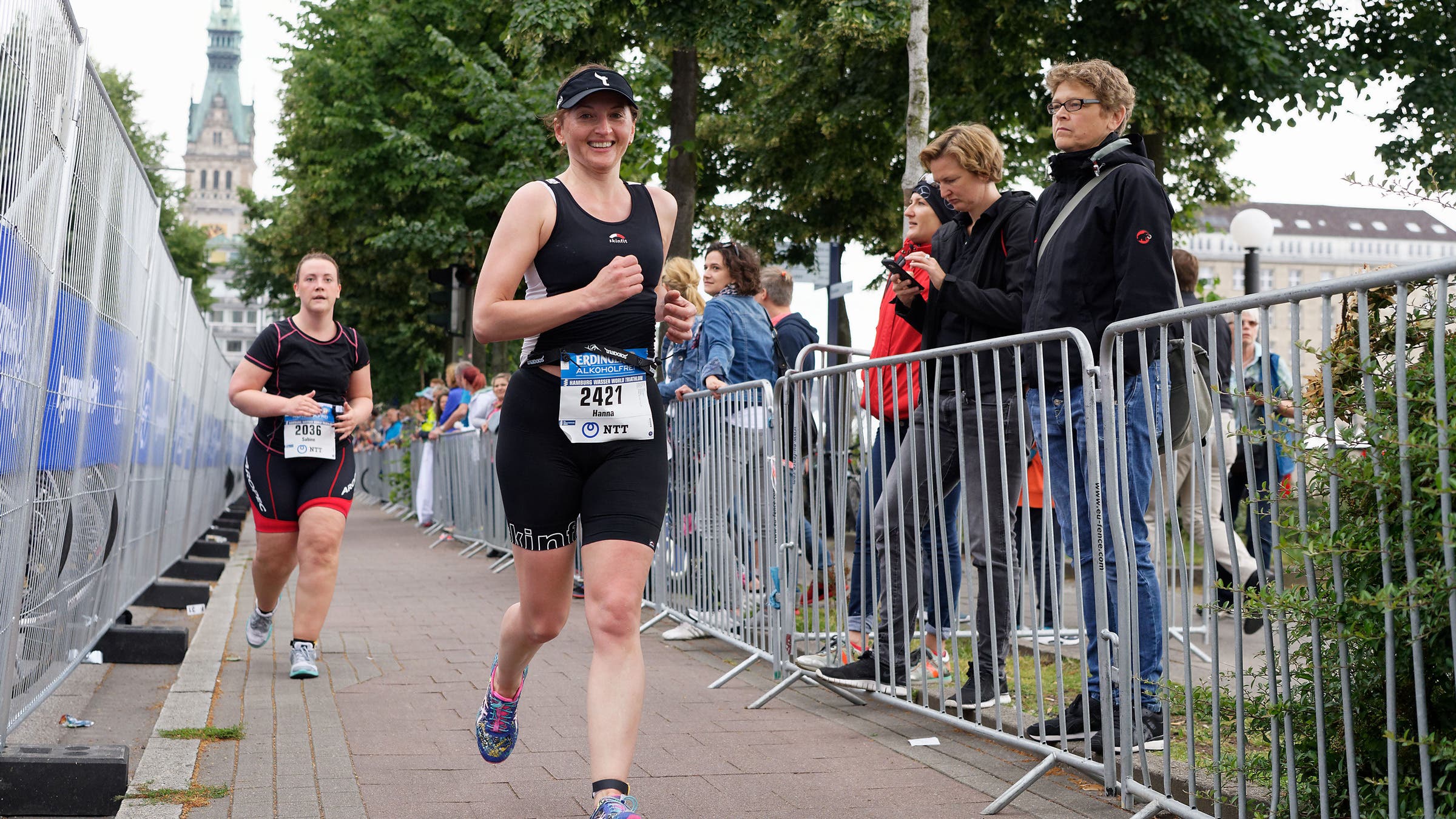
- Finally, think about the advantage you have coming from a running background. After the initial leg, the strong swimmers’ best discipline is behind them. A strong rider always has to hold off a little since they know the run is coming. But as a runner, when everyone else is tired, you get to finish with your strongest event. There’s an old encouraging triathlon quote that pros used to use: “Swim for show, run for dough!”
Ready to go after your first triathlon finish? Check out this collection of training plans for triathletes. A few of our favorites: