Published April 15, 2021 03:00AM
Simple Drills Any Runner Can Do to Improve Balance
Running is really just hopping from one leg to the other. Working on your balance will lead to better performance.
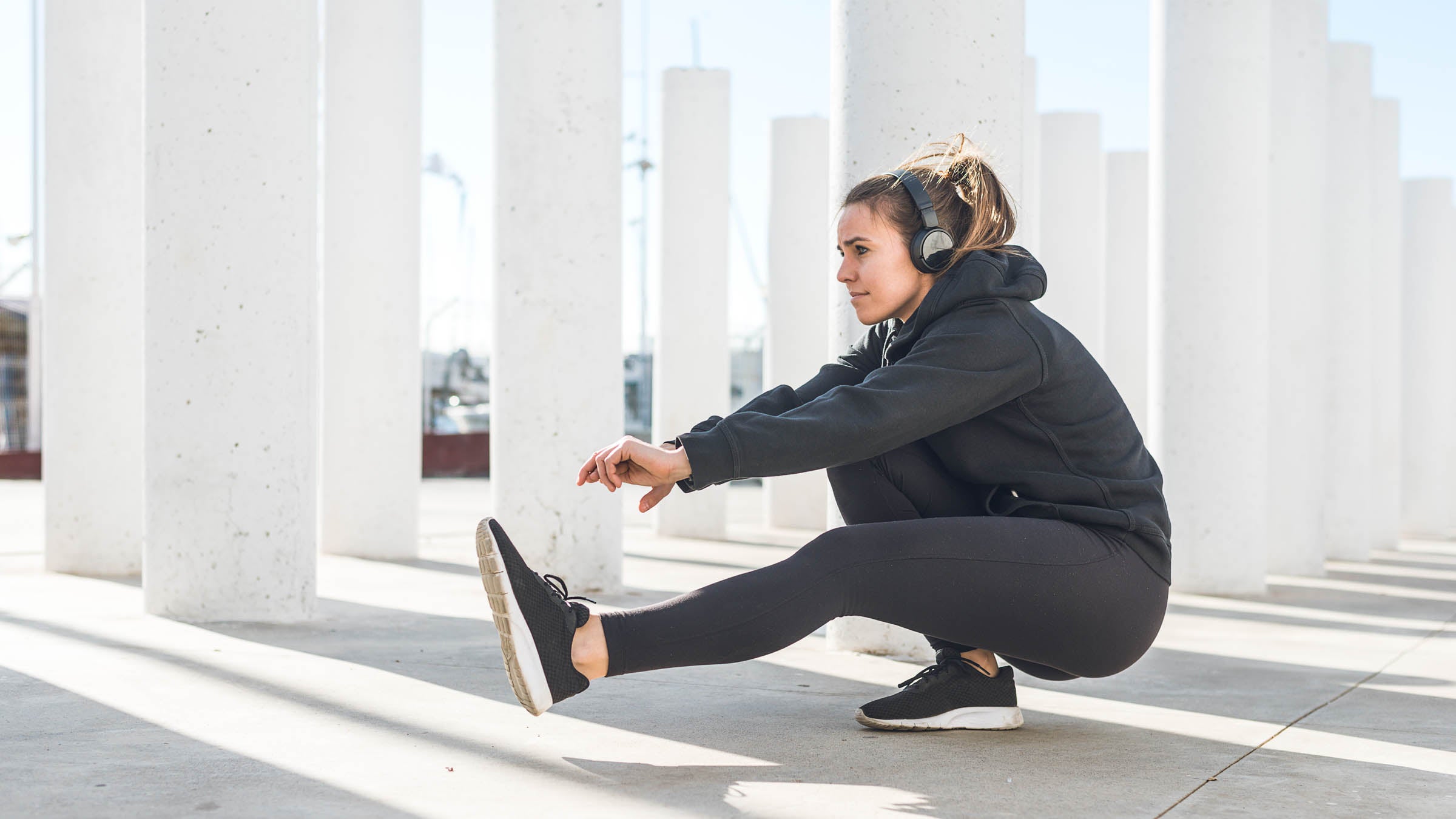
(Photo: Getty Images)
It would behoove all of us runners to supplement our mileage with exercises that improve balance. Efficient running demands that our nervous systems coordinate our feet, legs, and hips to absorb impact and create propulsion. Running is, essentially, a series of single-leg hops while moving forward.
Over time, poor single-leg balance increases the risk of injuries like plantar fasciitis, as well as tendinopathies of the Achilles, patellar, and hip tendons. And we risk falling, especially out on the trails, when we lack balance. Here’s what you need to do to improve your balance.
RELATED: 8 Moves to Help You Strength Train for Any Terrain
Take a Balance Test
- First, assess your single-leg balance. Time yourself on each leg.
- Stand in bare feet, hands crossed on your shoulders.
- Lift one leg off the ground and don’t touch the other leg.
- Hold 45 seconds or until loss of balance.
- Compare your time to the following averages. If you’re below average, keep practicing the test until you improve, then move on to more challenging exercises below. Grip the ground with your feet and focus on one spot in front of you or on the floor. Make it more challenging by closing your eyes.
| Age | Time in Seconds, Eyes Open |
| 18-39 | 45 |
| 40-49 | 42 |
| 50-59 | 42 |
| 60-69 | 32 |
| 70-79 | 22 |
| 80-89 | 9 |
| Total, All Ages | 33 |
Use Foot and Toe Drills
Your feet and toes (especially the big toe) are critical for balance. These drills will help you access your toes and use them to grip the ground. Practice these several times a day if possible.
Toe Yoga
The goal is to move your big toe separately from the other toes without moving your ankles. Lift the big toe while keeping the other toes pressed against the ground. Then, press the big toe against the ground while lifting the other toes. Don’t let the ankle roll in or out. It may seem impossible at first, but work on it. Do this either standing or sitting.
ADVERTISEMENT
Toe Lift, Spread, Reach
Place a pen or pencil on each side of your foot, one or two inches away.
- Lift your toes.
- Spread your toes as wide as possible and reach out toward the pens.
- Continue reaching and lengthening your toes as you place them on the ground.
- Repeat 10-20 reps.
Ankle Rolls
Press the ball of your foot and big toe against the ground and keep them there. Roll your ankles in, flattening your arch, then roll your ankles outward, lifting the arch. Keep the ball and big toe pressed to the ground. Repeat 10-20 reps.
Add in Comprehensive Single-Leg Exercises
Perform these two to three days a week, two to three sets per leg.
Single-Leg Squat
Stand on one leg with hands on hips. Grip the ground with your foot (shoes off). Perform a controlled squat, flexing at the ankle, knee, and hip. Bring your chest forward while your hips move back. Pause briefly at the bottom, and return up. Do 5-15 reps. Use your non-standing foot for stability or place a hand on a stable surface. If you’ve mastered this exercise then you can add weight in the hand opposite the stance leg and/or stand on a wobble board. This adds to the instability of the exercise and works your hip abductor muscles.
Split Squat
Take a lunge stance with one foot forward and one foot back. Keep the rear heel raised and your front foot flat. Bend both knees and lower yourself as low as possible in strict control, pause briefly, and return to the start position. Stay in the split position and repeat for 5-15 reps. Place a hand on something stable for help if needed. To increase balance demands, hold a weight opposite your front leg.