Published June 16, 2021 05:38PM
How to Chill Out, According to Olympic Hopeful Josette Norris
The secret to her big breakthrough performances this year? A serious ability to lounge, she says.
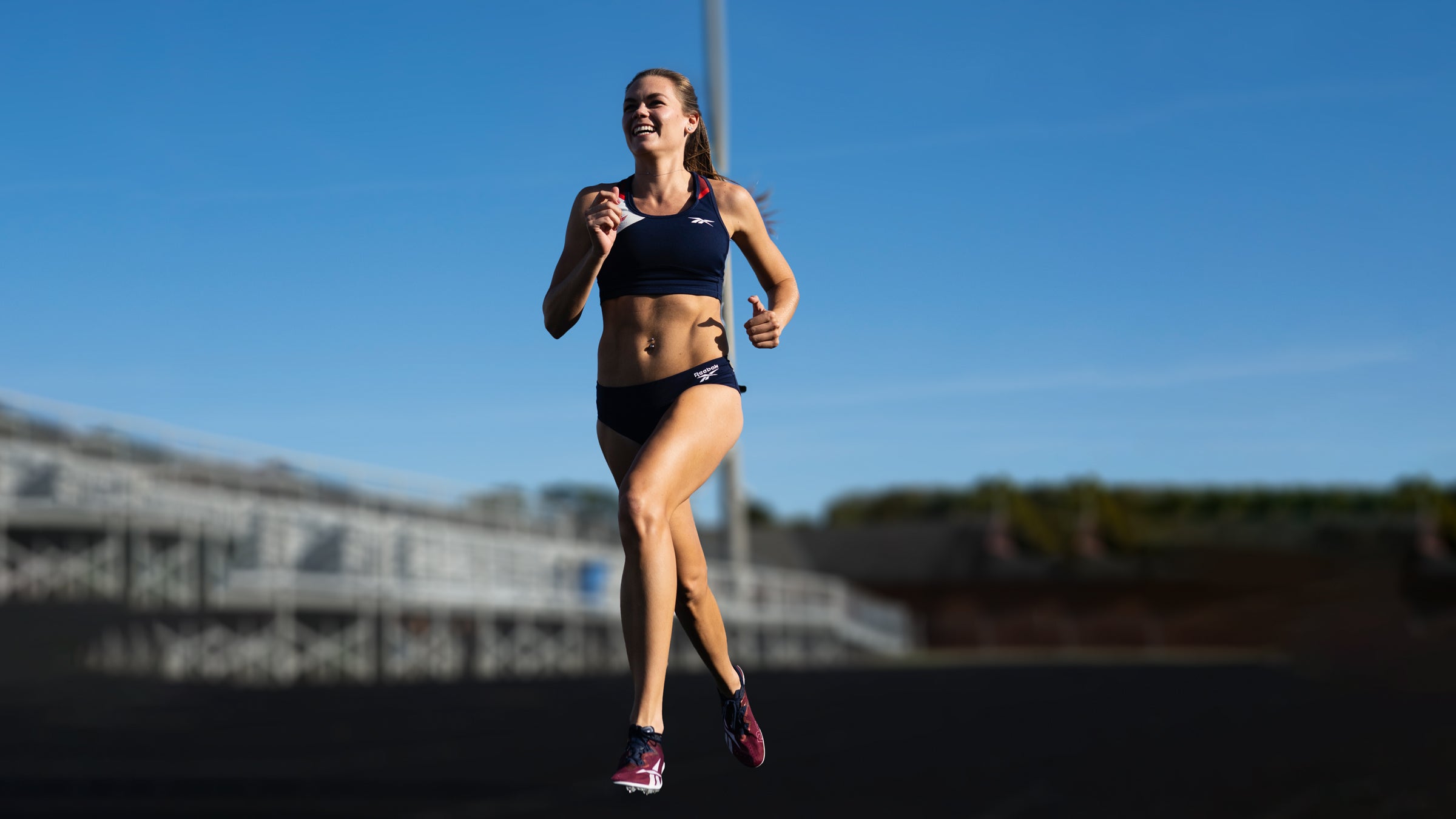
(Photo: Courtesy Reebok)
The extra year to train for the Olympic Trials? Yes, that helped Josette Norris.
She adjusted, finally, to her coach, Chris Fox’s, training. She settled into life in Charlottesville, Virginia, with her Reebok team and fiancé, Robby Andrews (also a pro middle-distance athlete). And she saw gradual steps in the right direction, followed by giant leaps.
In May she took almost 30 seconds off her best 5,000 meter time, finishing the Track Meet in 14:51.42. That has landed her amid a group of contenders to make the Olympic team—the first round of the event goes off at 5:45 p.m. Pacific on Friday, in Eugene, Oregon.
In May she took almost 30 seconds off her best 5,000 meter time, finishing the Track Meet in 14:51.42. That has landed her amid a group of contenders to make the Olympic team—the first round of the event goes off at 5:45 p.m. Pacific on Friday, in Eugene, Oregon.
“I was pretty nervous signing a contract [in 2020] in an Olympic year when I have to change everything again,” Norris says. “I’ve struggled in the past with transitions, whether that’s been from high school to college or when I transferred in college.”
RELATED: If the Shoe (Contract) Fits: What’s Behind Pro Runner Sponsorship Shakeups
Since the fall, however, Norris started feeling better, more often. Soon the tempo runs were faster, with less effort.
“The first workout coming back this past fall, I nailed a tempo that I hadn’t been able to nail the entire year before, and I was like, ‘I got it. I did it. I am on track here,’” she says. “Confidence has been such a huge change in just one year’s time.”
Now Norris knows she belongs in the lead pack, among the women like Bowerman Track Club’s Karissa Schweizer (14:26.34), Elise Cranny (14:48.02), and Vanessa Fraser (14:48.51), as well as other athletes like Rachel Schneider (14:52.04).
“It’s like, why can’t I be there? Why can’t I make the Olympic team? I’ve been able to put up a result that really reflects where I’m at in my fitness. It’s one thing to believe in yourself, but to actually see it come together, it’s really reassuring.”
Age: 25
Age: 25
Hometown: Charlottesville, Virginia
Event/PRs: 5,000 meters (14:51.42)
Training tip: After graduating from Georgetown University, Norris took the pandemic year to grow into her pro career and gain consistency in her training. It’s paid off with breakthrough performances throughout the beginning of 2021. The biggest factor? Her ability to do nothing.
“I’m obsessed with making sure I have fuel with me at a workout, for right after. I think I’ve had a chocolate milk every day for the past five months, which is a little concerning,” she says. “And I’m really good at doing nothing between my runs. I don’t have a very busy schedule—I’m very comfortable with just laying on the couch all day to recover. I’m not the best napper, but watching TV, I can get my heart rate pretty much as low as you could get to take a nap. That’s my secret: lounging pretty seriously.”
RELATED: 7 Key Rules for Proper Recovery from a Hard Run
Favorite workout: On the hilly roads of Charlottesville, Norris has seen progress on her long runs. Her go-to for feedback on her fitness is a 14-mile progression run.
“I’d much rather do a progression run over a tempo—I just love working into things, not starting things off very quickly,” Norris says. “It’s such a great workout and we get this extra little boost with the hills that you don’t actually think about, but then you realize how strong you’re getting from these runs.”
The worst part of race day: No surprise: it’s the waiting. Although she excels at doing nothing, she doesn’t always like to be required to do nothing.
“The last race I sat on the hotel bed for six hours straight and I was like, ‘Maybe I should leave the hotel room?’” Norris says.
The best part of race day: Norris takes a moment to appreciate the opportunity to race.
“Just testing myself and my limit and seeing how I stack up against the rest of the world is the best feeling” she says.
Mantras or last words to herself on the starting line: Norris’s college coach, Julie Culley, a 2012 Olympian in the 5,000 meters, once asked her to pick a word she could repeat during the NCAA championships. Norris chose, “commit.”
“I wanted to commit to the field, commit to the pace, commit to the group,” Norris says. “And that’s definitely stuck with me the past few years. When I make a move, I commit to that move.”
Pandemic pastimes: Norris and Andrews realized in the final month of their free Disney+ subscription that they were on borrowed time to get to watch all the Marvel movies. They put their endurance to the test and watched 21 of the Marvel Universe films in chronological order.
Pandemic pastimes: Norris and Andrews realized in the final month of their free Disney+ subscription that they were on borrowed time to get to watch all the Marvel movies. They put their endurance to the test and watched 21 of the Marvel Universe films in chronological order.
“I think we were averaging one and a half a day,” Norris says. “I was pretty impressed afterward with how many movies we ended up watching.”
In addition, Norris perfected her AeroPress coffee, upgrading from her Keurig.
“I made it my mission to find the best ratio for the AeroPress,” she says. “You can travel with it and now it’s part of my race routine. I bring it everywhere with me now.”
RELATED:
- 10 Olympic Hopefuls Dish on Life, Training, and Tokyo
- What Would Your “Walk-Up” Song Be? 8 Top Olympic Trials Contenders Share Their Picks
ADVERTISEMENT
Editor’s Note: This article is part of a series leading up to the 2021 U.S.A. Track & Field Olympic Trials, highlighting many of the top athletes contending for the U.S. Olympic team. You can find all of our coverage here.