Published December 7, 2022 08:12AM
Originally posted onTrail Runner Magazine
What Is Pelvic Tilt And How Can It Affect Your Running? Here’s The Science.
Pelvic tilt isn't always something that needs to be fixed, but understanding it can help you run stronger. Here's what you need to know.

(Photo: Jude Forrest Photography)
Whether you’re new to trail running or a longtime fanatic, there’s a good chance you’ve heard the term “pelvic tilt.” From messing with your stride to causing back pain and tight hips, there are a host of issues we like to attribute to the enigmatic pelvic tilt. Although the term is thrown around often, uncovering the truth behind it leads into murky territory.
To clear things up a bit, let’s examine the types of and contributors to pelvic tilt, why it matters for trail runners, and how you can address this mysterious yet common condition.
What is pelvic tilt?
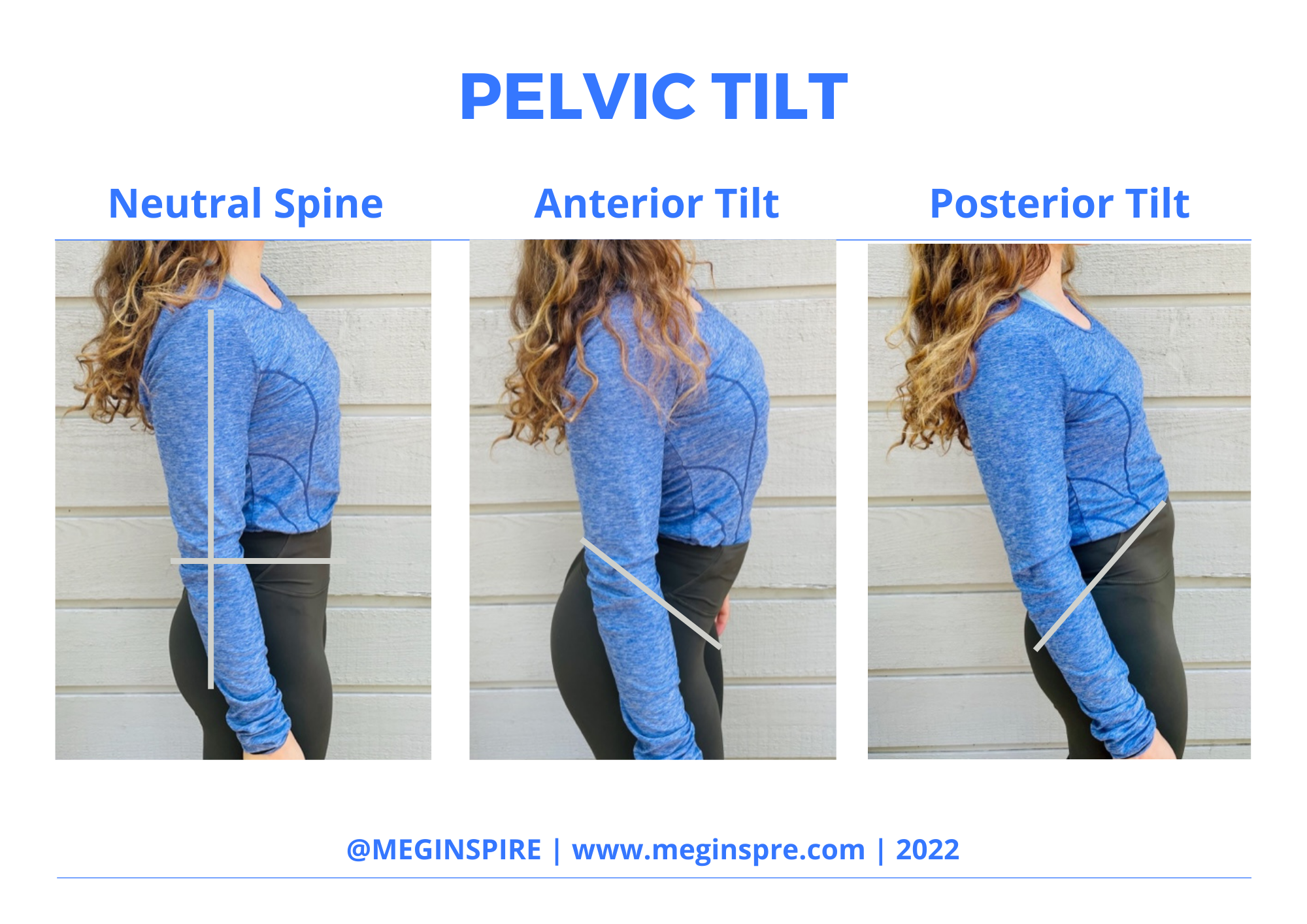
Our pelvis is a basin-shaped bone structure between our abdomen and torso that supports our spinal column and helps protect our abdominal organs. Following this basin-like shape, imagine your pelvic bone as a bowl of soup. If you tip the bowl forward, you spill into anterior tilt, also known as lumbar lordosis. If you tilt backwards, you spill into posterior tilt, also called lumbar kyphosis. If your bowl tips toward the left or right side, that’s lateral pelvic tilt.
Bottom line: we don’t want soup spilling in any direction. In an ideal world, all of our soup stays in the bowl so we can enjoy it in our bellies. But that’s often not the case, especially for those of us who balance weekend warrior trail adventures with desk jobs or a more sedentary day.
ADVERTISEMENT
When is pelvic tilt an issue?
Contrary to popular belief, pelvic tilt is not necessarily always a problem that needs fixing. There are plenty of variations that don’t impact performance or lead to injury. To put it bluntly, the idea that we need to be perfectly symmetrical is hogwash.
Research suggests that these types of asymmetries are quite common. A 2011 Manual Therapy publication showed that upwards of 85% of males and 75% of females exhibit 6-7% anterior pelvic tilt, often without any symptoms. Hearing this, you can send the idea of “perfect posture” to rest, as everyone’s soup bowl can handle a few degrees of tilting without spilling.
RELATED: Is Your Posture Affecting Your Running?
When pelvic tilt causes pain, though, we need to look into a correlation, according to Matt Walsh, DPT at Evolution Healthcare & Fitness in Portland, Oregon. Anterior pelvic tilt (tipping the bowl forward) may show up in the form of tight hip flexors and weak abdominal muscles, while posterior pelvic tilt (tipping backward) can manifest in a tight lower back and weak glutes. Lateral pelvic tilt, on the other hand, shows up as an imbalance from side-to-side, meaning your left hip may be higher than your right or vice versa. While all tilts can lead to consequences, lateral shifts often lead to tight glutes and hips and IT band issues. Especially for runners, this is one to look out for, as it can lead to imbalances that travel far beyond the pelvis, from the way our shoulders sway all the way down to our footstrike.
ADVERTISEMENT
What causes pelvic tilt?
When looking into causes of pelvic tilt, clinicians such as physical therapists and chiropractors start with evaluating hip flexibility and lumbar (lower back) posture. When our posture becomes compromised due to sitting too often or incorrect movement patterns, this creates tighter hips or weaker ab muscles, which can lead to pelvic tilt. If you are looking to check in with your body prior to seeing a clinician, Walsh provides a few self-assessments that you can use to determine whether you may have a tilted bowl of soup on your hands (or, rather, your hips).
RELATED: Ask The RDN – Rest Day Nutrition
Pelvic Tilt Self-Assessments
Lie flat on your back, lifting your legs so that your knees and hips are flexed at a 90 degree angle (similar to the start of a “happy baby” yoga pose). See if you can flatten your low back onto the floor. If you can’t, Walsh suggests that you may either have a very stiff spine, lumbar lordosis or both, meaning an anterior tilt or excessively arched spine.
Next, bring one knee up to your chest while straightening out the other leg, as a simple hip flexibility test. For the bottom leg, you should be able to get the back of your knee straight and flat on the surface you are lying on. If not, this could be another sign of lumbar lordosis.

ADVERTISEMENT
How can you prevent pelvic tilt?
According to Walsh, maximizing core strength and stability is a central component to preventing pelvic tilt. Your core helps protect your lumbar spine by maintaining proper spine curvature and keeping our pelvis in a neutral position (a balanced soup bowl). To assess your core strength, start with these three exercises:
- Single leg plank: We know that planks are pretty great, but have you ever tried a plank on one leg? That adds a twist (no pun intended, as the goal is not to twist). Aim to hold a 60-second plank on a single leg, lifting one foot just a couple inches off the ground, keeping your spine neutral and hips squared toward the ground. Does one side feel easier? The easier it is, the better your capacity to control your ab muscles and thus prevent pelvic tilt.
- Dead bug: Lying down on your back with a small rolled up towel under your lower back, aim to keep your back flat on the floor against the towel while bringing your knees up to 90 degrees, with your feet off the floor and shins parallel to the ground. Lengthen your opposite arm and leg, while keeping the other hand overhead and the alternate leg at 90 degrees. Try to hold for 30 seconds each side prior to switching, all while keeping your back as flat as possible.
- Side plank for the obliques: Start on one elbow in a side plank position. Lift your hips off the ground and aim to maintain a straight line from your top shoulder all the way to your foot. Try to hold for 60 seconds per side without letting your hips drop. Note which side is easier – and if you start feeling it in your lower back, that’s probably a sign that your oblique muscles on the side closer to the ground could use some strengthening to combat lateral pelvic tilt.
One theme Walsh notices in working with trail runners who train in a predominantly linear pattern is that runners often need to improve their lateral motion, both in terms of rotational and single-limb exercises. Side planks, lateral shuttles with bands, pall-of-press, and trunk-twisting movements like a woodchop are all good for trail runners. To connect with your entire kinetic chain, load up your lateral and twisting movements using a cable machine, resistance band, medicine ball, or additional load.
RELATED: The Best Exercises To Prevent Lower Back Pain
ADVERTISEMENT
A Few More Tilt Tips
While a strong core is one component to prevent pelvic tilt, there is more you can do to prevent and solve this pesky issue. Consider the following lifestyle and training guidelines to keep your pelvis happy:
- Strengthen your glutes, lengthen your spine and loosen your hips. Glute bridges, hip flexor stretches and back exercises like cat-cow can all help mobilize and strengthen these areas. Try to perform these for at least 5-10 minutes a day (minimum of 2-3 times per week) to keep your glutes firing, release tension in your hips and maintain mobility through your spine.
- Take walk breaks throughout the work day. While you may run for an hour in the morning, sitting for another 8-12 hours a day is a recipe for tight hips, a sore back, and a weak core – all of which can lead to pelvic tilt. Spending just 5-10 minutes a day on movement will pay dividends for your pelvic health and overall mobility.
- Ensure proper posture when sitting. No matter how many breaks we take throughout the day, sitting upright in an aligned position is one of the most important things you can do for your back and hips. Just remember, your glutes can’t do much work when sitting. A stand-up desk can be a powerful tool for those of us with sedentary jobs.
- See a physical therapist for treatment and prevention. No matter how many preventive or self-soothing exercises you do, sometimes it’s best to consult an expert for personalized recommendations. Did we mention there are also pelvic floor physical therapists? That conversation is for another day, but for now, make sure you take care of any pelvic tilt mishaps by starting with these tips.
*Please note: This article is for educational purposes and should not be substituted for medical advice. Be sure to consult your physician or another licensed medical professional for a personalized treatment plan.