Published December 7, 2022 08:13AM
Originally posted onTrail Runner Magazine
A New Take on “Carb Loading”
We’ve all heard of carb loading. But how do you do it, and does it really work?
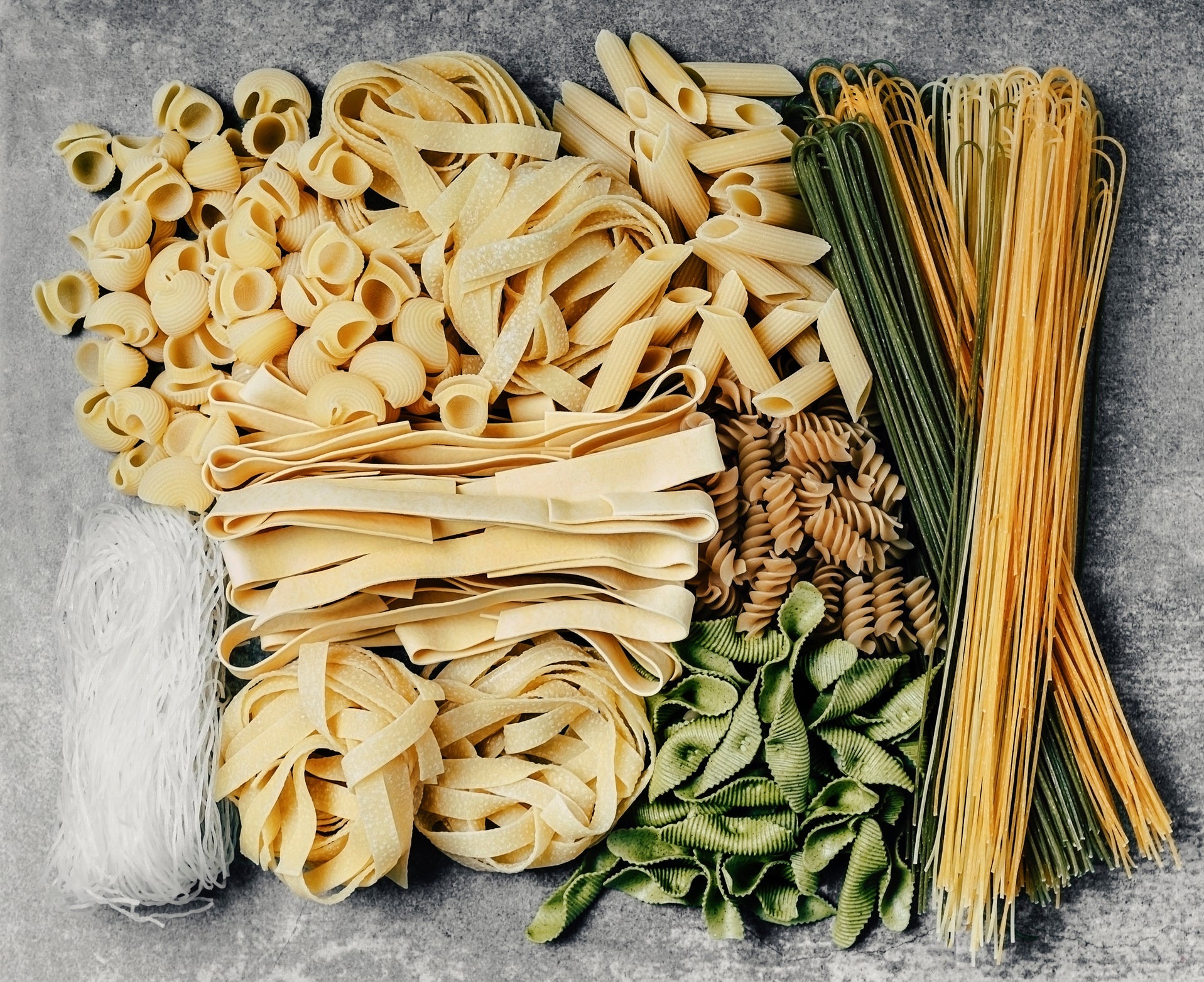
Close-up of dry pasta (Photo: Getty Images)
For runners, the words “carb load” often bring to mind mounds of spaghetti the night before a big race, and evoke a sense of nausea thinking about getting in such a large volume of food. It may even send some runners headed to the nearest bathroom.
Scientifically speaking, carbohydrates are the most efficient source of energy production. They are used to produce ATP to power our cells. This can happen immediately, or carbs can be stored in the liver or muscles as glycogen. These glycogen stores are important during exercise, as stored carbohydrate is turned back into glucose and used to power working muscles.
On average, the storage capacity for glycogen between the liver and muscles is about 1,800-2,000 calories, but depending on sex, body weight, training status, and diet, this can increase to up to 3,200 calories. That’s enough for 90 minutes to 2 hours of running before hitting the wall. Loading up your glycogen stores before a big event can ensure that you are taking advantage of a full gas tank.
But how is this best achieved?
ADVERTISEMENT
The idea of the “carb load” was first studied in the 1960s, when Scandinavian scientists had a group of cyclists bike to exhaustion and measured their muscle glycogen content. They compared the cyclists’ performances when they had eaten a high-carb diet prior to their tests with their performances after a low-carb meal. When on the high carb diet, they were able to cycle 3 to 4 times longer. There was something to this.
The practice of carbohydrate loading was not truly put into practice until 1969, when British runner Ron Hill used the strategy as part of his training to win the gold medal in the marathon at the European Athletic Championships in Greece. The best part is, he was able to avoid hitting the dreaded “wall.”
From that point on, runners began to utilize carbohydrate loading for their own performance benefits, and a protocol developed: a few days of a low carb diet and higher intensity training followed by a few days of lower volume and higher carbohydrate intake. This evolved into many runners just focusing on the pre-race plates of pasta, which can leave you feeling sluggish and nauseous.
More recent research on carbohydrate loading shows that endurance training and carb loading dovetail well, when done properly. Our bodies are pretty good at carbohydrate loading in the 3 days before a target event without doing a higher intensity, lower carb depletion period. The combined effect of reducing training volume (tapering) and increasing carbohydrates is effective enough to fill your glycogen stores.
How should I carb load?
In order to get the most benefit from carbohydrate loading before a race, you need to do it correctly. Without proper insight into how much you really need, you may be missing out on your diet’s full potential.
While it may vary based on your current carbohydrate intake, a carbohydrate load can range from 5-12g per kilogram of body weight per day.
For a 150lb runner, that means a range of 477-818g of total carbohydrates per day in the 3-5 days leading up to an event. Keep in mind that the sheer amount of carbohydrates can be difficult for even the most experienced runners to get in so figuring out what strategies might work best for you is important. The goal isn’t to approach the starting line bloated and nauseous.
RELATED: Should You Train By Time Or Distance?
Carb Loading Tips
- Focus on simple carbohydrates due to their lower fiber content. They’re often easier to eat, and the lower fiber can help prevent gastrointestinal distress on the run. Examples include: pretzels, white rice, white pasta, and bagels.
- Drink hydration mix: This not only helps you meet your carbohydrate needs, but also gives you a hydration and electrolyte boost, both of which are also important pre-race.
- Get your snack on: Spreading out your carbohydrates throughout the day and including carbohydrate rich snacks can make it less intimidating than a huge pasta dinner the night before you race.
- Plan ahead: Know your snacking strategy and carb sources ahead of time. This will help you hit your targets without trying to figure it out on the fly.
- Reduce your protein and fat intake: Protein and fat are slower to digest and fill you up quicker, making it harder to get enough carbs. You don’t need to eliminate them completely, but replacing some of your fat or protein with carbs will make the carb load easier.
RELATED: Up Your Carb Game With These 10 Foods

Sample Carbohydrate Loading Day (for a 150lb Runner)
Breakfast:
3 waffles with eggs and a banana
Total: 119g carbs
Snack #1:
1 cup berry-banana smoothie plus quick cook oatmeal
Total: 83g carbs
Lunch:
1 cup quinoa salad with a medium sweet potato on the side and ½ cup applesauce
Total: 102g carbs
Snack #2:
20 pretzel sticks with a medium pita and 3T hummus
Total: 89g carbs
Dinner:
1.5 cups cooked basmati rice with veggies and chicken plus 1 piece Naan
Total: 98g carbs
Snack #3:
8oz greek yogurt with ½ cup granola
Total: 56g carbs