Updated December 30, 2024 04:57PM
Crush a 10K—or 10-Miler!—With Two Unique Training Plans
Whether you're training for a 10K or a 10-mile race, these training plans will help you stay on track and reach your goals.

The 10K is one of the most popular of middle-distances: at 6.2 miles, it’s the perfect length to put a blend of both your speed and endurance to the test. It also doesn’t require quite as lengthy of a training process as, say, a half marathon or marathon, making it a great option for busy everyday runners who want to push themselves without as steep of a time commitment. But there’s another middle-distance event that—while less pervasive—has become quite popular: The 10 miler. Adding those extra few miles pushes the endurance effort to a new level, and can be a great building block if you’re eyeing up a distance race in the future.
By building the right balance of speed and endurance, you can find success at a race distance of 10 kilometers or 10 miles—or both.
RELATED: Take the “You vs. the Year 2025” Running Challenge
10 Kilometers versus 10 Miles
Most American runners are comfortable switching between imperial measurements (inches, feet, yards, miles) and metric measurements (centimeters, meters, kilometers). Some of the races we do are measured in miles, others in kilometers. When we train on the road, we typically record our distance in miles. But when we hit the track, we switch to meters without batting an eyelash.
ADVERTISEMENT
You don’t have to be a mathematical genius to do this. The important thing to understand is that a mile is more than 60 percent longer than a kilometer. On a practical level, this means that if you start a 10-mile race at your 10K pace, you’re going to be in for a world of hurt in the last 3.8 miles!
When it comes to training for these events, though, the two measurement systems aren’t so different. The training required to run a successful 10K is very close to optimal training for a 10-miler. For proof of this, look no further than the example set by Kenyan-born American runner Janet Bawcom in 2014. On March 22 of that year, Bawcom won the Azalea Trail Run 10K in 32:03, one of the fastest road times ever recorded for this distance. Just two weeks later, taking advantage of the same blend of speed and endurance she developed in her training, Bawcom set an American record of 52:12 at the Cherry Blossom 10-Miler.
RELATED: Self-Talk (And Solid Training) Lead Nell Rojas to a 10-Mile Championship Win
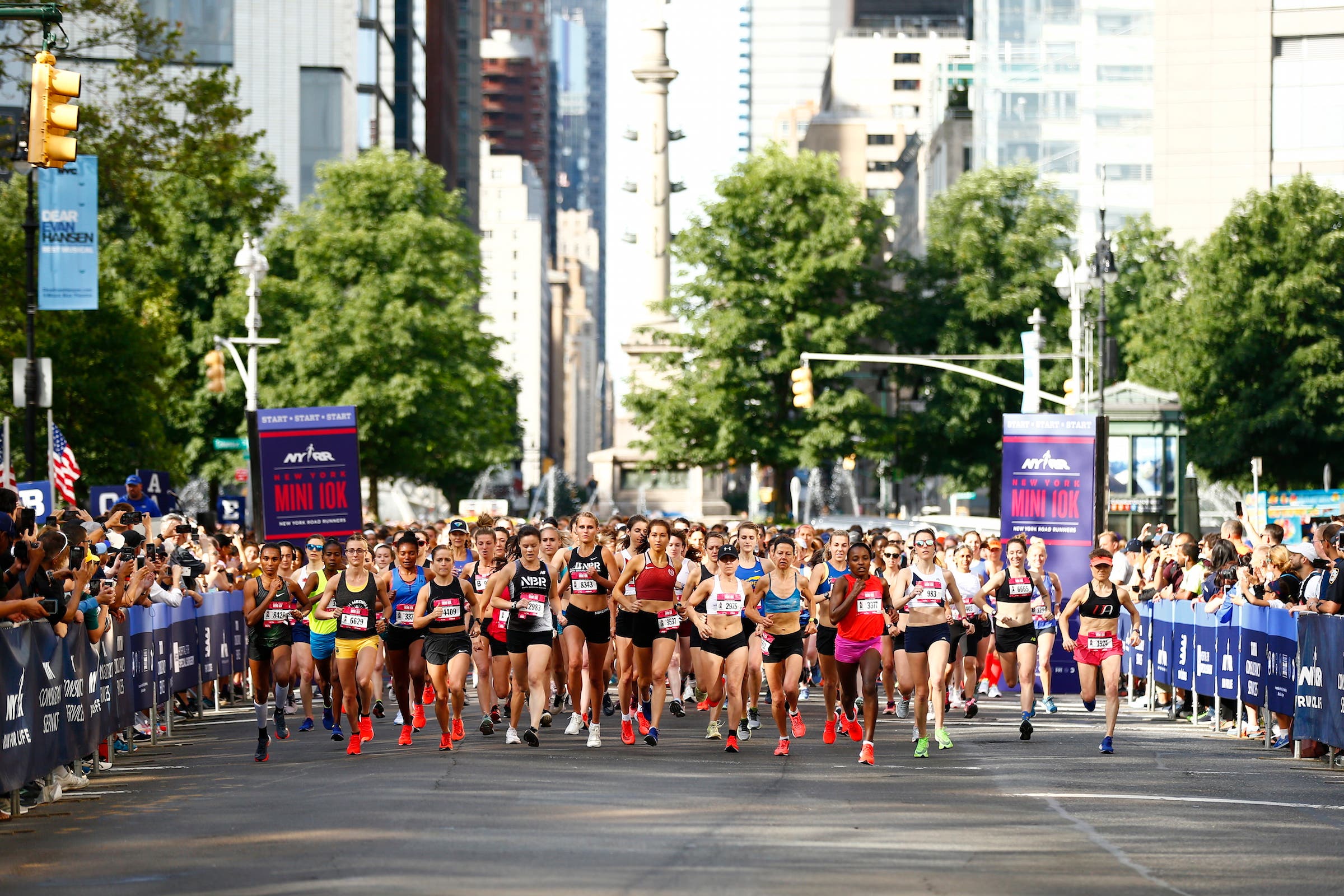
Training for a 10
The most effective way to train for a 10-miler is to train for a 10K first and then, once you’re fully prepared for that distance, spend a few more weeks developing extra endurance. Of course, if you’re going to train for a 10K on the way toward running a 10-miler, you might as well run a 10K too! The ideal time to do the 10K is about four weeks before your 10-miler.
ADVERTISEMENT
The following training plan provides a few options for runners aiming to run “10.” The first option is to complete the first eight weeks, run a 10K at the end of week 8, and stop there. Or you can continue on and run a 10-miler four weeks later. A third option is to skip the 10K race, running a solo 10K time trial instead on that day, and just do the 10-miler. The plan also has a beginner version (unshaded boxes) and an advanced version (shaded boxes).
The advanced plan includes workouts that may be done either as a run or as a cross-training session. If you choose to cross-train, select a legs-dominant, non-impact cardio activity such as the elliptical trainer or cycling.
Both the beginner and advanced plans employ a simple, three-zone intensity scheme:
- Low intensity (LI) is a comfortable jog that allows you to speak in full sentences without losing your breath.
- Moderate intensity (MI) corresponds to the highest speed you could sustain for 30 minutes (if you’re a newer runner) to 60 minutes (if you’re already in pretty good shape).
- High intensity (HI) ranges from the highest speed you could sustain for about 5 minutes all the way to a relaxed sprint, or 95 percent effort. Tailor your high-intensity efforts to the specific workout format, going harder when there are shorter bursts.
As with any training plan, listen to your body as you make your way through it, and give yourself extra rest if you feel unusually fatigued or sore on a given day. Click here to download this full article and our full training plan.
RELATED: Not Doing Speed Work? Here Are 3 Easy Ways to Add It Into Your Training
ADVERTISEMENT
How should I vary the “high-intensity” pace in different workouts?
Adjust your effort based on how long the interval is. In a speed-play run featuring short, 20-second HI bursts, for example, do these as relaxed sprints. In an interval run featuring 90-second HI efforts, do these sections at or near your estimated maximum speed for five minutes.
RELATED: Use This 10-Week Training Program to Boost Your Speed
10-Mile Races on Our Bucket List
A quick google search will show you that there’s no shortage of 10K races to jump into on any given weekend. But 10-mile races, on the other hand, are a little hard to find compared to many other race distances. Don’t mistake that for thinking there aren’t great ones out there. Here are our top five.
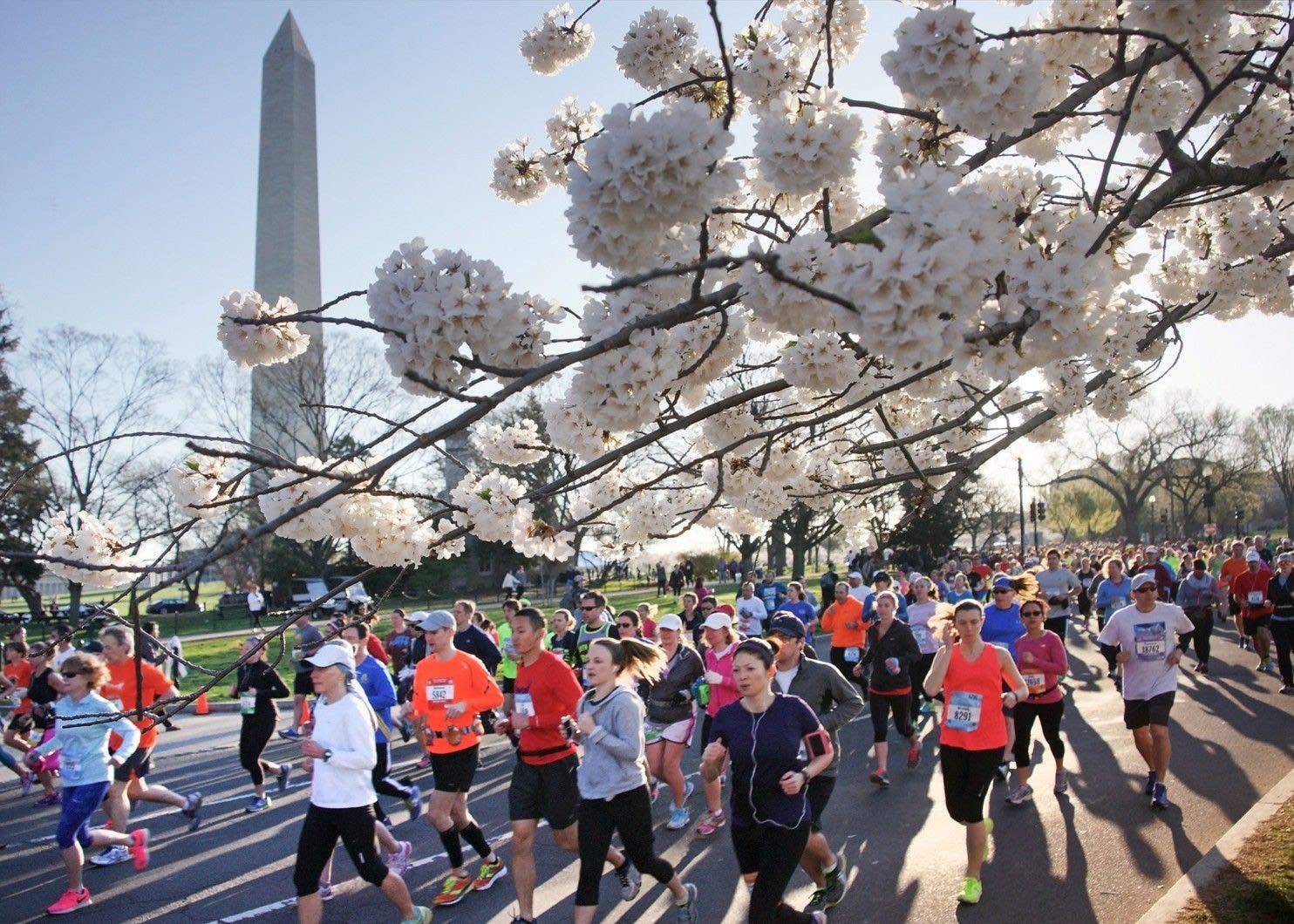
- Cherry Blossom Ten Mile Run | Washington, D.C. This race should be on every runner’s bucket list. Created in 1973 as a tuneup race for runners preparing for the Boston Marathon, the Cherry Blossom Ten Mile Run is still going strong, attracting more than 18,000 runners on the first Saturday in April—which may or may not coincide with the annual blooms of the cherry trees.
- Army Ten-Miler | Washington, D.C. If you haven’t gotten enough of our nation’s capitol, there’s no better way to tour it than by running this race on the second Sunday in June. Featuring a flat, smooth course, it’s also a good race in which to go for a fast time.
- Broad Street Run | Philadelphia, Pa. America’s largest 10-mile road race attracts more than 40,000 runners to the City of Brotherly Love on the first Sunday in May each year. Cue up the “Rocky” theme music when training for this slightly downhill, point-to-point race.
- Crim 10-Mile | Flint, Mich. This city has seen troubled times recently, but it remains a great place to run a 10-mile race. Born in 1977, the Crim 10-Mile is now part of the Crim Festival of Races, which includes 1-mile, 5K and 8K options as well. The fun all happens on the fourth weekend of August.
- Lighthouse Run | Racine, Wis. This race gets its name from the city’s Wind Point Lighthouse, which runners pass in two directions on the third Saturday in June.
Whether you’re partial to the more popular 10K, or obsessed with the tougher-to-find 10-miler, there’s nothing but upside as a runner to mixing these middle distance events into your training routine.
ADVERTISEMENT
So what are you waiting for: get training!