Published November 7, 2023 03:18PM
Road to the Trials: How Taking the Long View Can Help Your Running
As elite mother-runner Neely Gracey prepares for her third Olympic Marathon Trials, she discusses the benefits of looking ahead.
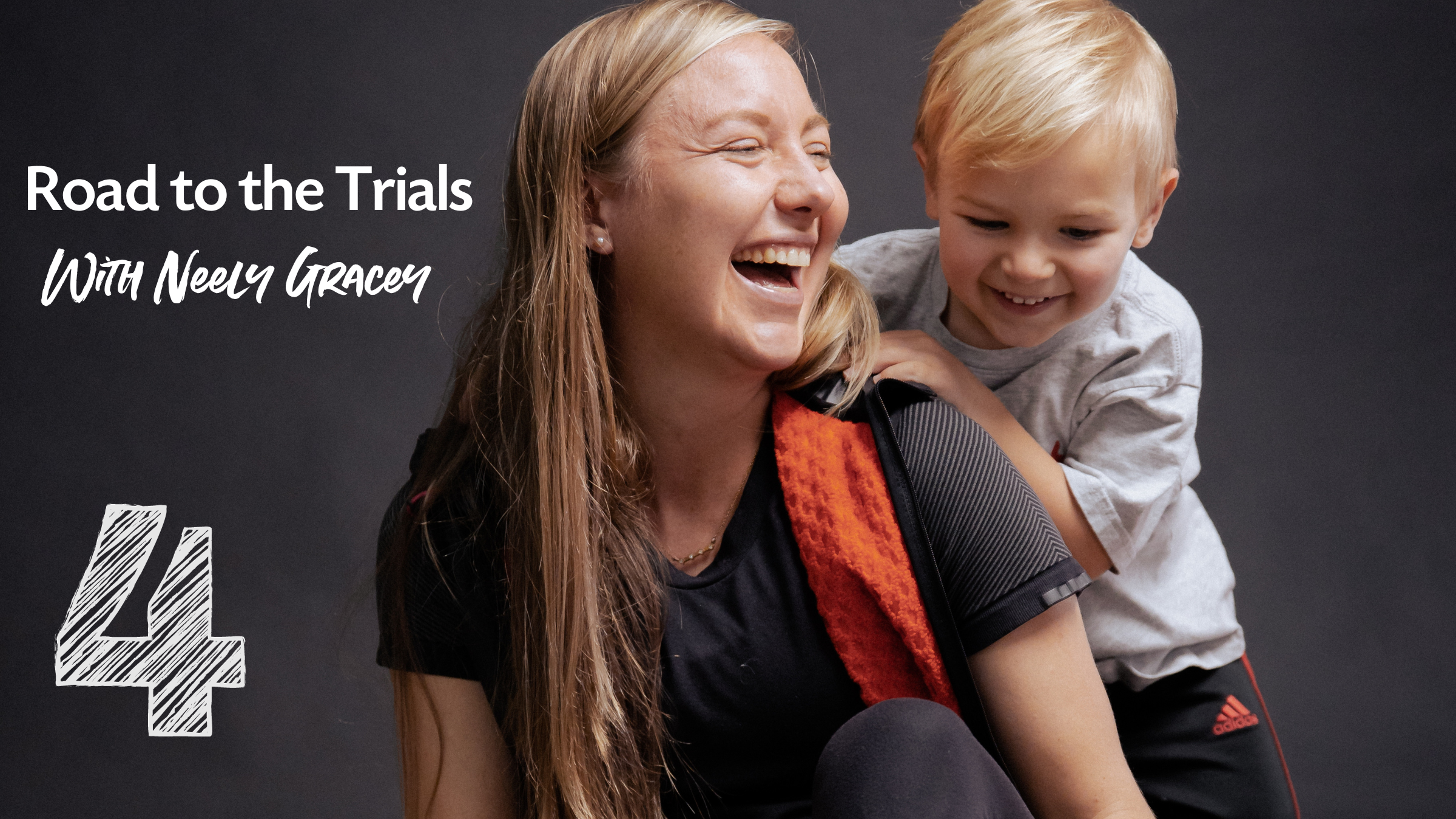
Road to the Trials (Photo: Neely Gracey)
When you’re a runner with a big, breakthrough goal in mind like a Boston Qualifier or a personal best, it’s tempting to try to get there as quickly as possible. Maybe it’s a BQ this fall, that huge PR in your next half marathon, or a strong return to racing six months after having a baby.
I get it, of course. Like you, I’m motivated to achieve great things. And even if you’re not a pro runner aiming for Olympic teams, goals sometimes have specific deadlines. For instance, my goal of running a BQ for 2025 requires a qualifying time by next fall.
But as a coach, my favorite athletes to work with—and in my experience, the most successful—take a different approach. They’re looking a year down the line, or more. They come to me saying, “I have a big goal, and I need support, accountability, and a progressive plan to get there.”
These athletes have big dreams, but know it might not happen overnight. They’re not rushing their fitness, but giving it time to build and flourish organically. As the weeks and months pass, they stay committed to the process and are satisfied with each step of progress. Every month and year, they improve as runners. Most importantly, they remain happy and healthy along the way, more resilient to any setback they encounter.
ADVERTISEMENT
Going Slow to Get Fast
During my elite running career, I’ve taken both approaches. I decided to try to qualify for the 2020 Olympic Marathon Trials at the last possible opportunity, so I knew if I did reach my goal at the Houston Marathon in January, I’d have barely a month to prepare for the Trials themselves. I qualified, but afterward, my body couldn’t recover in time. I took extra weeks off instead of pushing hard into a deeper hole. I started the Trials in Atlanta in February 2020 knowing I wouldn’t finish.
Don’t get me wrong, I was proud of all that. One important element of taking a long-term view is recognizing when you’ve done your best with the time and resources you have available. Yet, it made me eager for the days ahead, when I’d have more of a chance to set myself up for success.
Fast forward two years and another kid. This time, I qualified in December of 2022 for the Trials in February 2024. With 14 months to prepare, I have much higher hopes for not only completing the full 26.2 miles but also aiming for the big goals I laid out in the first article of this series—being in shape to run 2:26 and finishing in the top 10.
Here is how my husband/coach Dillon and I structured that time:
- Last December, after qualifying for the Trials at the California International Marathon, I took nine days off to make sure I was sufficiently recovered to take on increased training load.
- From December through January, for six weeks, I ran for fun. That meant fewer miles with no structure and less intensity.
- Between February and June, I did a speed segment, in which I ran track sessions, fartlek workouts, and hills. I raced 10Ks, half marathons, and the stroller mile.
- In July, I took 10 days off.
- In August, I ran more fun miles.
- In September, I began a more consistent build toward the Trials marathon. I’ll go through all the phases of a periodized training program to work toward that big goal.
I recommend a similar approach to my athletes. For instance, let’s say you get a big PR or qualify for the Boston Marathon in a fall race this year. First, you should take at least a few days off to celebrate and recover. Then, you might choose to do some low-key miles for a couple of months, spend one or two cycles training for shorter distances, then return to a marathon build-up for a fall race next year, or Boston 2025.
Here’s why that type of extended structure is beneficial for adaptations, using my example:
- I had two full periods of recovery after two successful training cycles — one for CIM, the other for faster, shorter races in the spring. Those bits of downtime offered an opportunity to rest and reset my body and mind.
- The speed segment in the spring improved my running economy, or how efficiently I run. This took a hit during pregnancy. Rebuilding it will pay dividends when I go back to the marathon.
- That, plus another year of consistent running after having my second son, Rome, allowed me to build fitness without pushing too hard, too fast, and increasing my injury risk.
- I can see evidence of progress from month to month and year to year. For instance, I ran two of the same half marathons in consecutive years. From June 2022 to June 2023, I improved my time in the Steamboat Half Marathon from 1:18:44 to 1:16:10. From last October to this month, my time at the Boulderthon dropped from 1:16:09 to 1:14:53. Very motivating!
ADVERTISEMENT
Planning for Your Future
What does this mean for you in your next big quest? Let’s say you have a goal of running a Boston Qualifier. You have some time to shave off, so you take a long-term view, allowing yourself a year or two to get there. Rather than focusing on a singular goal and risking burnout, you can work toward it in various ways.
If you’re like many adult marathoners, there’s plenty of room to build and finesse speed. You might dedicate one or two training cycles between marathons to that pursuit, training for a 5K or a 10K.
For these training blocks, your long runs won’t be quite so long but still substantial (the training plans in my book for 5K and 10K have long runs of up to 16 miles). During the peak of your training—the part of the cycle I call “Performance Phase”—you’ll run shorter, faster repeats frequently to practice running at or near your VO2 max.
You might even do a series of shorter races over the course of a few months, which can give you a confidence boost as you watch your fitness building and your times dropping. Then, when you return to marathon training, you’ll be able to do all your workouts at a faster pace.
Another example might be if you’re a new mom coming back post-birth. Instead of rushing into serious racing, I recommend taking at least two training cycles before working towards your next race goal.
Once you’re cleared to return to running, the first cycle involves getting to a base level of fitness and mileage. A shorter race or two at the end of this cycle can be a cherry on top, but the main goal is safely rebuilding. You won’t do a lot of race-specific training during this block.
A focus during this cycle can be to fine-tune your routine now that you have a new addition to your family. For example, do you need to change the time at which you train based on your childcare situation? Can you ask for more support from your partner or another family member? Do you need to consult a dietitian about adjusting nutrition with breastfeeding? All these are as important to your long-term running goals, if not more so, than adding more miles to your weekly long run.
Then, after a short break, you can set your sights on a race goal (if you’re ready; there’s still no rush). Depending on the distance you’re targeting, this could be three months or six months.
That gives you time to work through all the phases of a periodized training plan without skipping steps. Start by building base mileage, then introduce faster running, perhaps with hills and fartlek runs. Next, add in more structured and pace-specific workouts. Finally, taper to your goal race.
For best results, don’t rush these four phases—each one should take weeks, and a full training cycle that moves through all of them will unfold over several months. When you’re looking for a training plan to follow, consider those that follow a similar structure. Some coaches and plans are explicit about separating and naming their phases and others aren’t, but if you take a moment to look through, you should be able to notice a shift in the types of workouts through the weeks and months.
ADVERTISEMENT
Keep the Fire Burning
Exactly how all this works for you will depend on your reason for running and what motivates you. You might have a goal that’s meaningful and long-term, and all your training through the years will lead to it.
But even if that’s the case, it pays to break your goal down into smaller bits, including the types of process goals I mentioned in part 2 of this series. In fact, research shows athletes who focus on smaller process goals not only perform better than those focused solely on outcomes, they also get a boost in self-efficacy—the belief that they can reach new goals and overcome obstacles in the future. Talk about taking the long view!
On the flip side, I coach many athletes with goals that have evolved over the years. Sometimes their only goal is to continue seeing what’s possible. They aim to get the best out of themselves for the next year or five years or 10 years, without limiting themselves to specific times or achievements. These mindsets naturally lend themselves to long-term planning; they just need a little structure along the way.
Either way, I think the best way to reach either specific goals or your overall potential, is to look farther than the next three to six months down the line. If you already have one big breakthrough in mind for the future, work backward on the building blocks to achieve it. Or if you just want to see how great you can be, develop a plan that cycles you through a variety of different types of challenges, so you can continue making progress.
And if your next big goal is closer at hand—as it is for those of us preparing for the Olympic Trials Marathon in February—start thinking now about what your life and running might look like beyond it, no matter how it pans out. Yes, like many other athletes, I’m heavily focused on that day. But I know that my running ability and worth as a human aren’t solely tied to any single outcome, and by thinking past it too, I keep that larger perspective.
We may live in an instant-gratification society, but there’s true value in a longer-term view of running. Looking ahead allows you time to create a clear road map of how to get to your bigger goal—and recruit the team and gather the tools you need to increase your chances of success, without burning yourself out along the way.
Click here to download a printable Long-Term Motivation and Planning Guide