Published February 12, 2024 02:00PM
Work Your Glutes with this Quick Single-Leg Exercise
This quick and simple exercise works your glutes, hamstrings, quads, and calves.
(Photo: Getty Images)
You’ve heard it before: Running is a single leg exercise. You are literally pogo-ing from one leg to the other as you run. Therefore, to prevent injury and maximize efficiency you should dedicate some of your strength-training time to working the muscles in each of your legs separately. Single leg exercises–AKA unilateral training–can also work to improve asymmetries in the legs (we all have them), lower the training load on supportive structures (like the spine), and improve joint stability.
If you’re unsure how to start building that single-limb strength, start here. We have one move to get you started that you can add in to your current routine and build upon as you get stronger.
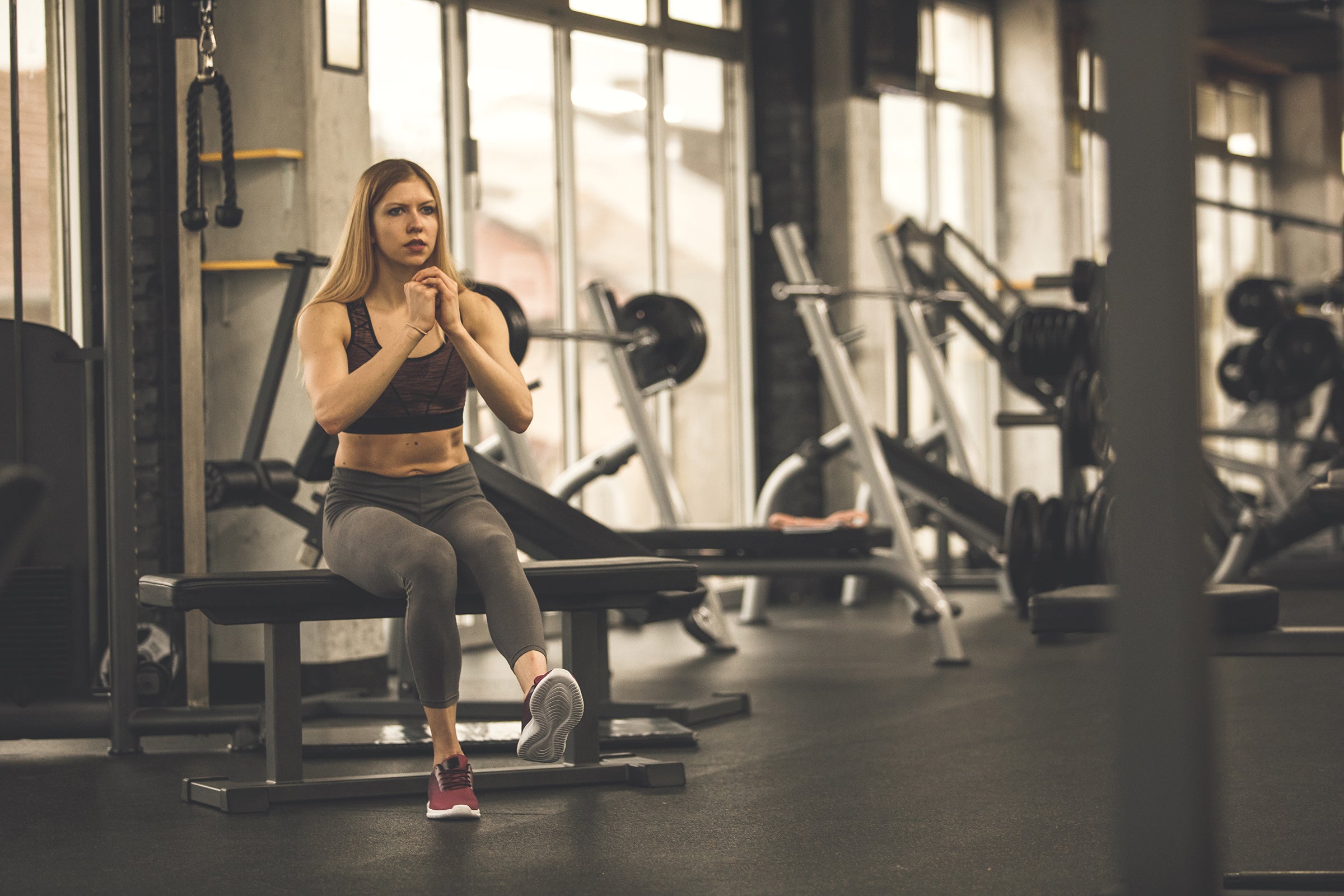
Single Leg Exercise: Sit to Stand
Your challenge is to practice this move three days a week, in at least three different locations. This is a great move to sneak into your everyday routine, since the only equipment you need is a surface to sit on. Experiment with surface height and firmness to challenge your nervous system and recruit more muscle fibers. Anything from a park bench to a couch will work.
Try it for a month and see what kind of progress you can make from the start to the end of the month.
ADVERTISEMENT
Muscles Worked
- Gluteus maximus, medius, and minimus
- Quadriceps
- Hamstrings
- Calves
RELATED: Why Do My Long Runs Feel Easier Than Shorter Speed Workouts?
How It Helps
This move strengthens your gluteus maximus for a more powerful stride, while also working your gluteus medius and minimus for improved single-leg and pelvic stability. The lowering part of the movement works your hamstrings eccentrically, protecting against hamstring strains.
How To Do It
Try this exercise first on a firm chair or bench that is about hip height.
- Start seated on the chair with knees bent at 90 degrees and lift your left foot slightly off the ground.
- Lean slightly forward and drive your right foot into the ground, keeping weight in your mid-foot to heel. Exhale as you rise to standing. Aim to keep your foot, knee and hip aligned.
- From this single-leg stance, inhale as you slowly reverse the movement to return to a seated position. Avoid plopping and focus on maintaining foot, knee, and hip alignment.
Make it easier: Keep most of your weight in your stance-side leg, but use your other foot as a kickstand to help you push off and rise to standing.
Make it harder: Use a lower and/or softer surface.