Updated November 24, 2024 10:43PM
Originally posted onTriathlete
If You’re a Runner (at Any Level), These RED-S Guidelines Should Scare You
The International Olympic Committee just came out with an update on Relative Energy Deficiency in Sport (or RED-S)—and endurance athletes are firmly in their crosshairs.
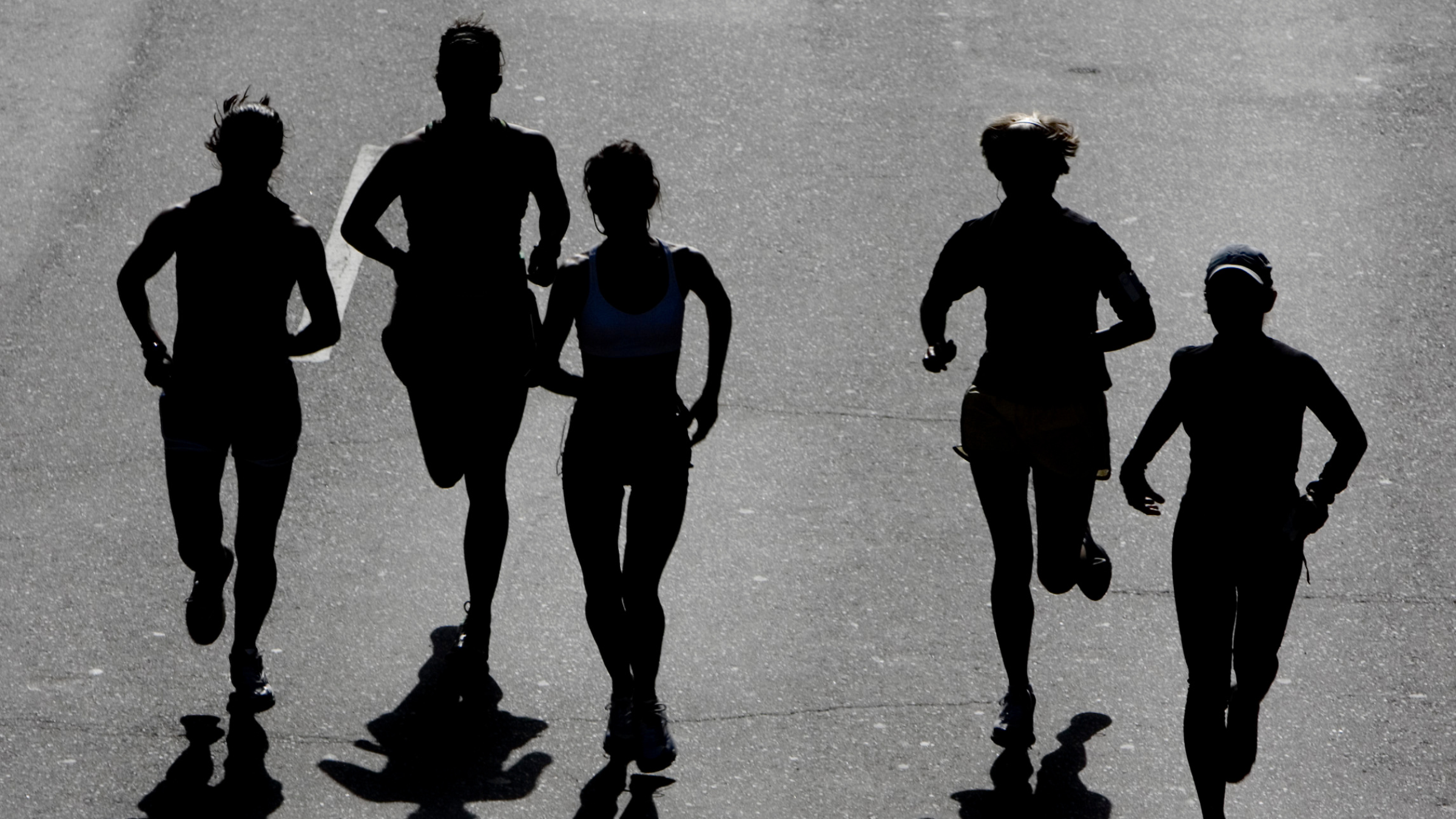
The IOC has released a new update about RED-S
In September, the International Olympic Committee issued an update to its consensus statement for Relative Energy Deficiency in Sport (shortened to REDs or RED-S). While it’s likely that none of the 17 doctors and scientists that contributed to the paper will admit it, they’re making a plenty of runners squirm with the new RED-S guidelines.
The 2023 statement has been expanded to incorporate new data since their last one in 2018: If you thought that RED-S was something that only skinny, elite, women need to worry about, think again. Athletes of all genders and abilities need to pay attention to both what they are eating and how much to avoid injury, illness, and a whole lot of lousy workouts (or worse). Warning – be prepared to get hit with some truth bombs.
RELATED: Running in Harmony: How to Tackle Food and Body Issues
What exactly is RED-S?
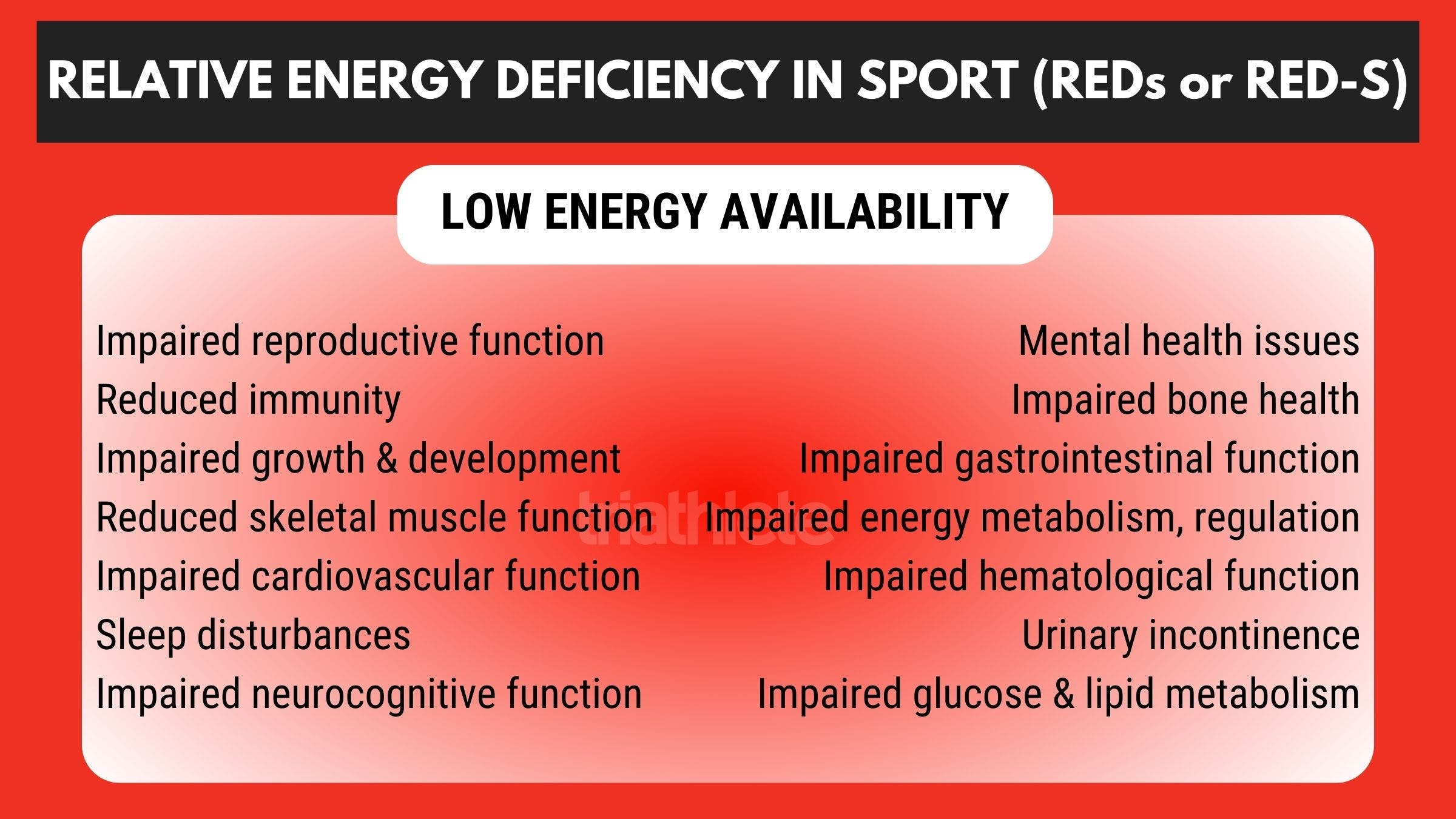
RED-S is a syndrome which includes the constellation of physical and mental health effects resulting from low energy availability (LEA) in athletes. When we do not take in enough calories to cover what we burn through exercise, there isn’t enough energy left over to cover our basic biological processes. Under most circumstances, a person would be in danger until they were able to take in more calories and come into energy balance. However, when that energy discrepancy is large and/or when it becomes chronic, the body will start to make changes to compensate for LEA which will result in some pretty scary symptoms. Athletes may be out of energy balance more often than they think due to the fact that they exercise often and do not always replace enough calories to cover those basic needs.
So why don’t athletes just eat more? There can be many reasons, of course. According to the IOC, they are often unaware that any possible performance enhancement from weight loss is short-term. Also, some athletes may simply be uninformed about nutritional requirements for endurance sport. Some may struggle with digestion or food intolerances. Others may be very attached to aesthetic goals like body composition changes and/or weight loss, even when performance stagnates or declines due to a lack of energy. The end result is the same–LEA, which likely leads to RED-S.
ADVERTISEMENT
New RED-S Guidelines
The following is a summary of the most important points of the IOC’s 2023 statement. Importantly, these new RED-S guidelines no longer apply to just elite and professional athletes. Any person who exercises at a high level, (ie: triathlon training of any distance) without adequate refueling can end up with RED-S.
Low carbohydrate intake is a problem
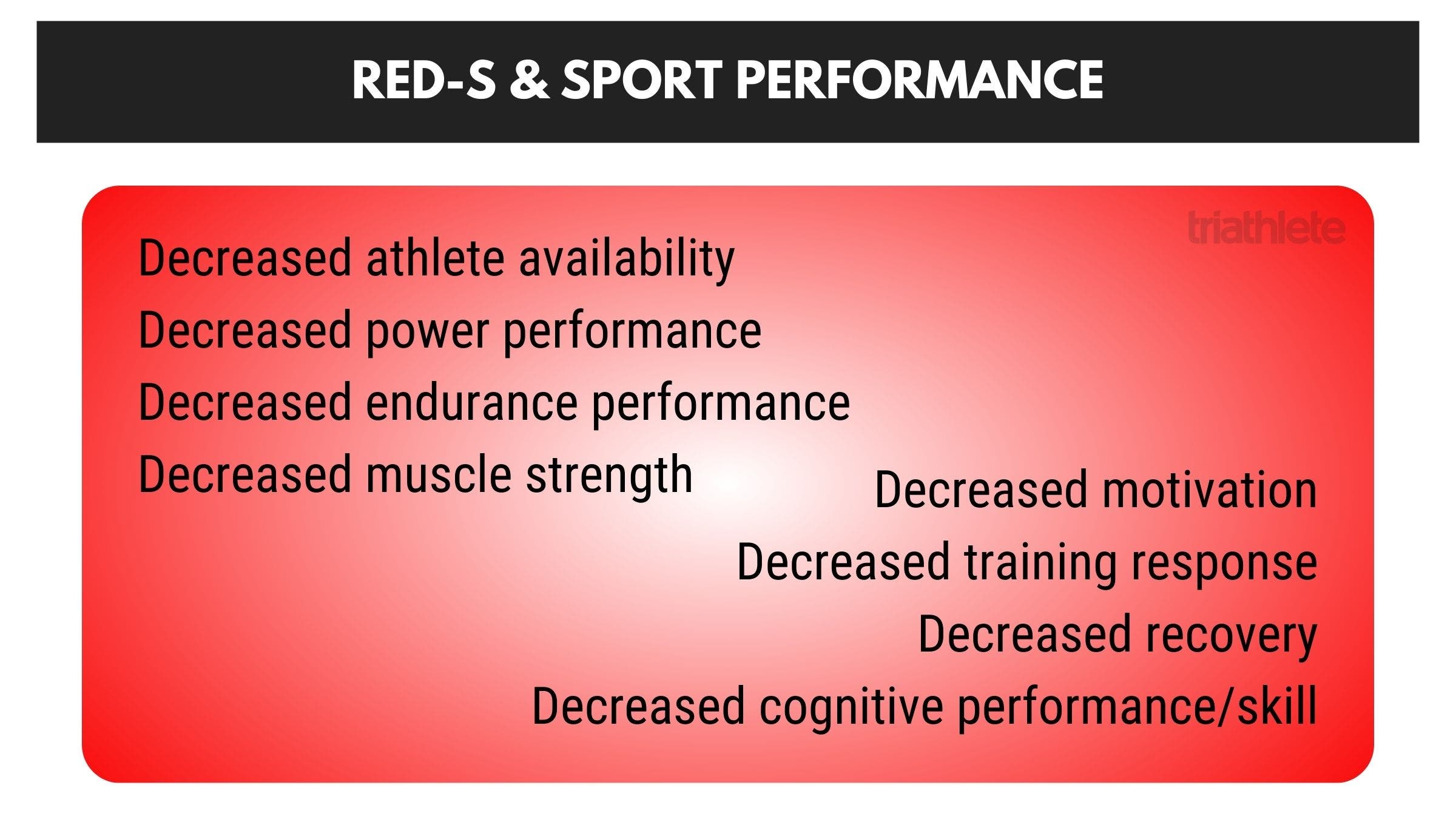
The IOC is aware that athletes tend to emphasize protein and cut carbs when they restrict calories, and they’re not having any of it. They clearly state that low carbohydrate diets lead to bone loss, a compromised immune system, and poor performance. Most importantly, the research showed that even if someone is eating enough calories overall, they will still be in danger if they are restricting carbohydrate intake specifically.
Mental health is a significant contributor to RED-S
Since none of this happens solely on a physiological level, psychological considerations, including anxiety and eating disorders (ED), are now considered to be high on the list of risk factors. The IOC was not shy about pointing fingers, calling out “social media influence, societal pressures, the athlete’s training/coaching entourage, a belief that a specific physique/weight/appearance will improve performance and/or overall body dissatisfaction” and listed a group of psychological indicators that might be associated with RED-S.
RELATED: 11 Reasons Your Heart Rate is High on Easy Runs
| Mood disturbances/fluctuations |
| Cognitive dietary restraint |
| Drive for thinness |
| Reduced sleep quality |
| Perfectionistic tendencies |
| Depressive symptoms and affective disorders |
| Primary or secondary exercise dependence/addiction |
| Anxiety related to injury and/or recovery |
| Sport-specific issues, such as difficulty coping with weight requirements |
Men are at risk too
Back in the old days, we used to talk about the “Female Athlete Triad” as the resulting condition of LEA. But, recent research shows that although it may take more severe restriction to see symptoms, male athletes also experience REDs. Serious health effects include low testosterone, osteopenia/osteoporosis, a decrease in lean body mass, poor performance, and a decrease in libido. For more, check out How Much Do You Know About the Male Athlete Triad?
Para athletes may have the highest overall risk of RED-S
In a recent study on para athletes of all types, it was found that 62% actively restricted calories to change their body weight or body composition, 32% had a high risk for ED, and 44% of the female participants had irregular or absent periods. As an added complication, differences in how a para athlete’s body bears weight may make them particularly susceptible to stress fractures as a result of LEA.
ADVERTISEMENT
Shots fired on body composition
Acknowledging that athletes may gain ideas about their bodies from the broader athletic community, the IOC did not hold back in its commentary. Again, they blamed aesthetic pressures and cultural considerations of certain sports to push restriction and underfueling in lieu of adequate understanding of physiology. Their own words on this are powerful, stating:
“Unfortunately, many members of the athlete entourage appear to (1) lack the knowledge of safe regulation of body weight and composition and how it can be utilized to improve performance while maintaining health; (2) have ignorance of the suitability of various body composition methods and the possible negative health effects consequent to inappropriate assessment and (3) have inadequate communication skills, with lack of optimized protocols on how to manage and safely implement the data.”
ADVERTISEMENT
What do you need to do to avoid RED-S?
The consensus statement includes comprehensive protocols for clinical assessment and a collaborative treatment strategy. Let’s break it down into key points that can really have an impact on any athlete.
- Recognize the symptoms of RED-S. Being able to identify the fact that those few “random” instances of dizziness when you stand up or not being able to get an erection are, in fact, random. Keep a record of what you’re experiencing in order to recognize patterns like the fact that you feel exhausted after a training session followed by a low-carb lunch, or that you are waking up in the middle of the night after hard efforts.
- Have a good baseline understanding of nutrition and what is considered adequate intake–especially for carbohydrates. We know that fasting, restriction, skipping meals, and cutting out food groups are all out of the question. But it’s not enough to know we need to eat more. In studies where underfueled athletes were placed on an energy-balanced diet, a significant number of participants resisted the increased amount of food and gave up. Without actually eating more of the right foods, we remain stuck. It’s ok to admit that we don’t have the right information or that we’ve been eating for aesthetics instead of performance. Becoming informed is crucial and there are great resources for every budget, from hiring a registered dietitian to following smart RDs on social media (look for one that focuses on sport performance and does NOT believe in weight loss coaching).
- Analyze training plans to discover if we are exacerbating LEA by training more than necessary to achieve our goals. But, before we do any of this, we’ve got to be honest with ourselves – again. Are we adding training sessions for performance or to do something else like manage either anxiety or last night’s pizza? A few tweaks to our training can be a big help to bring us back into balance.
The real solution starts with examining our motivation to participate in training and racing and find a way to set realistic expectations about what is necessary to achieve our goals. Remember that not all LEA is intentional. We might just need an update to our knowledge or to make an adjustment to compensate for new performance goals.
ADVERTISEMENT
However, if you find that your restriction is intentional, there’s no shame in recognizing the need for a mental health care practitioner who can offer support. One thing is for certain–if we are not eating enough to cover our basic biology, it’s not a question of “if”, but “when” we will experience the negative effects on our physical and mental health. Avoiding RED-S means avoiding LEA, so be ready to E-A-T.
RELATED: Tina Muir Is Developing Resources To Understand and Combat RED-S