Published April 13, 2020 01:01PM
Do These 4 Moves To Relax Tight Pelvic Floor Muscles
It’s time to loosen up—a strained pelvic floor can leave you vulnerable to injury.
Most women are familiar with exercises that tighten the pelvic floor muscles. These exercises are sometimes called kegels and involve squeezing and lifting the collection of muscles that run from the back of your pelvis to your pubic bones at the front, your pelvic floor.
Exercises like these might have been recommended to you if you have stress incontinence—when you leak a bit of urine when you sneeze or during a high impact activity like running.
This seems logical because if your pelvic floor is weak and you can’t prevent urine from escaping, then it makes sense to try to tighten up these muscles, right? Not necessarily. Many women who run already have very tight pelvic floor muscles and this might actually be the problem.
The pelvic floor can be so tight, in fact, that these muscles are effectively weakened because they are permanently overworking in a constricted state. So when the bladder is put under sudden pressure, they are unable to generate enough power quickly to block off the flow of urine.
In these circumstances, working on exercises, like kegels, to tighten the pelvic floor will actually make things worse, not better.
ADVERTISEMENT
Signs Your Pelvic Floor Muscles Are Too Tight
If you have an overactive pelvic floor it’s highly likely that you will be experiencing some kind of chronic pelvic pain. Pain coming from the pelvic floor can be felt around the sacroiliac joints, the pubic symphysis, groin, hamstrings, buttocks, iliotibial band, and the abdominal and lower back muscles. You might have even tried some kind of treatment for pain in one of these areas that wasn’t effective because the pain is actually coming from your pelvic floor.
Other common symptoms include:
- Sudden urges to urinate
- A need to urinate often, even when your bladder isn’t very full
- Difficulty starting the flow of urine
- A sense of not being able to empty your bladder fully
- Constipation
- Coccyx pain (pain in your tailbone)
- Painful intercourse or other sexual dysfunction (dyspanurenia)
Why Does This Happen?
The pelvic floor muscles not only help maintain continence but they also form one part of your ‘core,’ a group of muscles that work together to support your pelvis and lower back.
Your core muscles have to respond fluidly and efficiently to meet the complex, high-impact demands of running. “Pelvic floor muscles are like a hammock,” says ACE Medical Exercise Specialist, Celeste Goodson, “and they’re moving up and down every time you hit the ground and they have to be responsive.” It can cause problems if they are either too loose or too tight.
If another part of the core is weak or not working properly, your pelvic floor muscles have to work even harder to compensate and support your pelvis. Some women also try to compensate for a loose pelvic floor by forcing it to stay up while they run. Over time, this can cause them to become tighter and eventually painful and weakened.
ADVERTISEMENT
What You Can Do
First and foremost, if you are experiencing any pelvic symptoms it is important to visit your doctor or gynecologist to rule out any potential medical issues. However, if you suspect that overactive pelvic floor muscles are the culprit, the best advice is to begin regular ‘down training’ exercises to help relax your pelvic floor as well as stretches for the muscles around your pelvis and abdomen, to restore balance. Here are four exercises recommended for this condition:
Abdominal Breathing
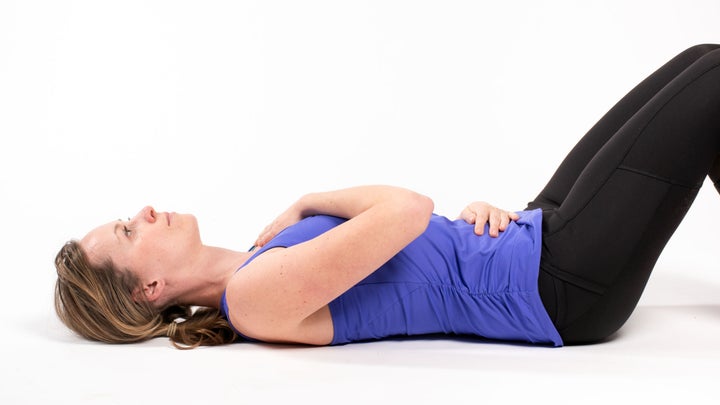
- Lie down on your back with your knees bent. Place one hand on your chest and the other hand on your abdomen.
- Inhale and imagine your abdomen filling with air like a balloon. Your lower hand should rise while your top hand remains still.
- Move the breath down and lower your pelvic floor, letting it relax and open
- Make a smooth transition to the next breath without pausing.
- Exhale and allow the air to move out of you without effort starting from the ribs down towards the pelvic floor.
- Count to keep each breath long and even, three seconds in and three seconds out. Repeat for five minutes daily.
Stretch and Release
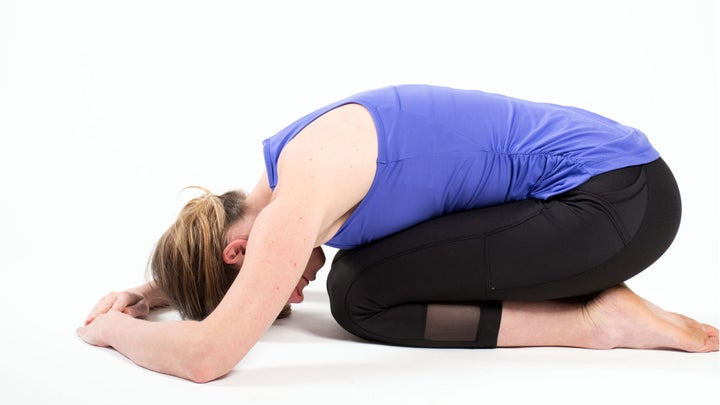
- Kneel with your bottom on your heels and your forehead resting comfortably on the ground.
- Focus your attention on your pelvic floor muscles.
- Inhale and imagine stretching the back of your shirt with your ribs and relaxing the muscles around your tailbone as the air fills your lungs.
- Exhale without effort.
- Repeat five cycles of breathing in this position.
Abdominal Stretch
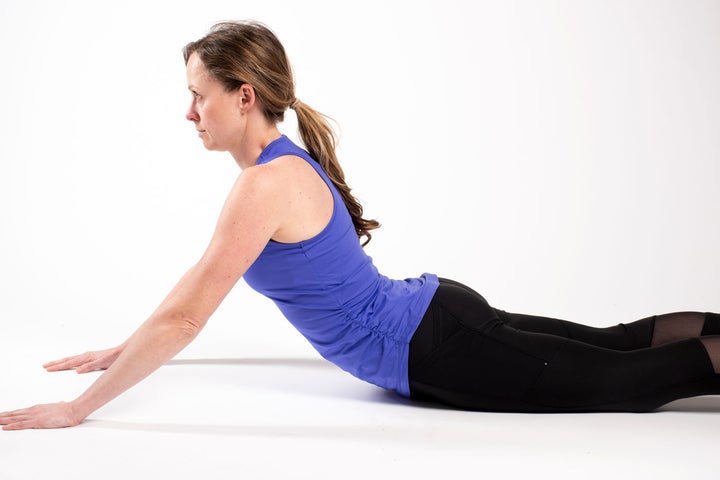
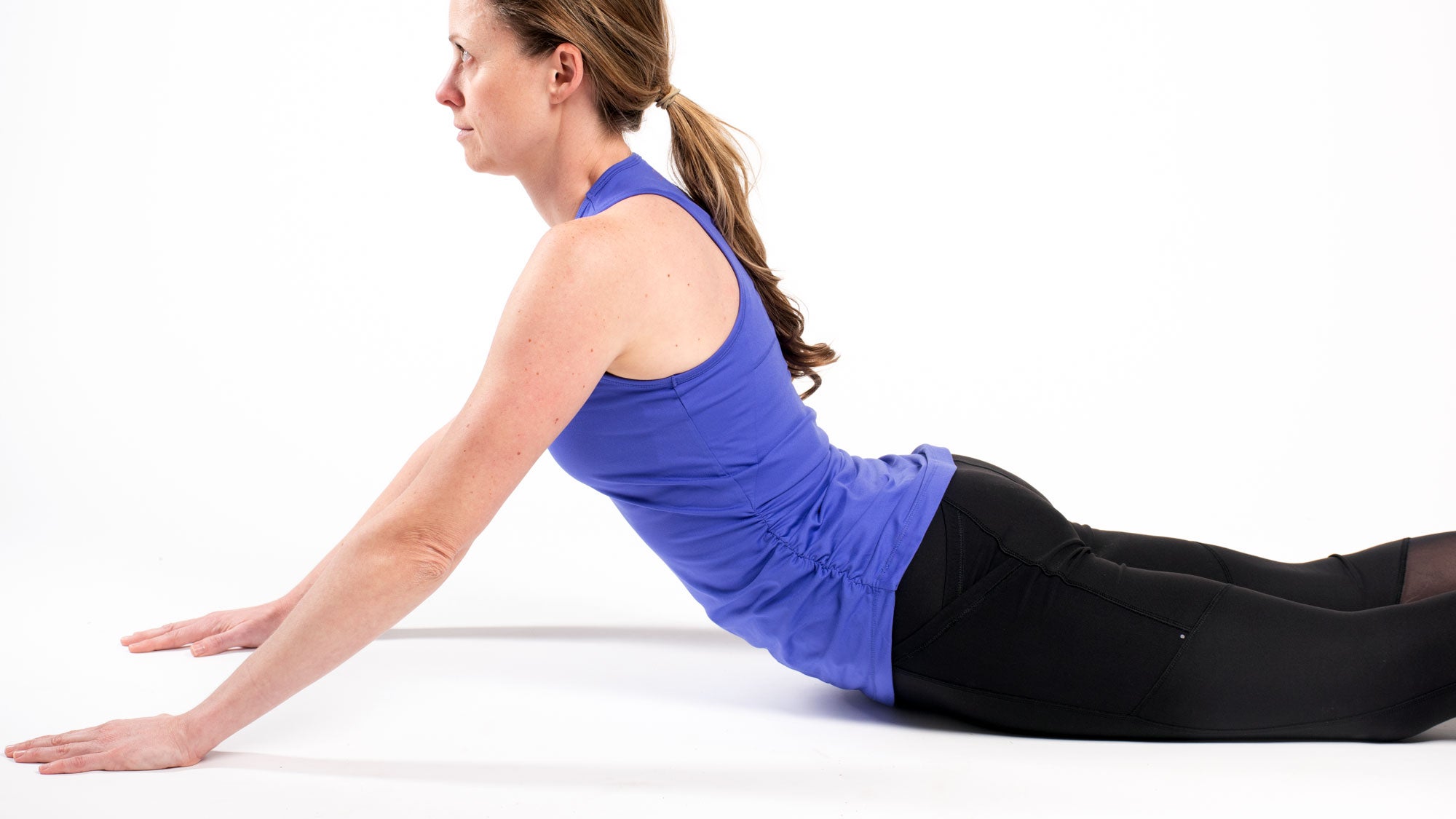
- Lie face down on a mat and place your hands by your shoulders.
- Inhale to prepare, sending the breath down towards your pelvic floor and towards the back of your rib cage.
- Exhale and press the floor away with your hands to gently lift the body until your arms. are straight. Keep the front of your pelvis facing the floor and move within a comfort zone so that there is no pressure in the lower back.
- Do three cycles of breathing in this upward position allowing your abdominal wall to stretch. Lower again and repeat five times.
Hip Stretch
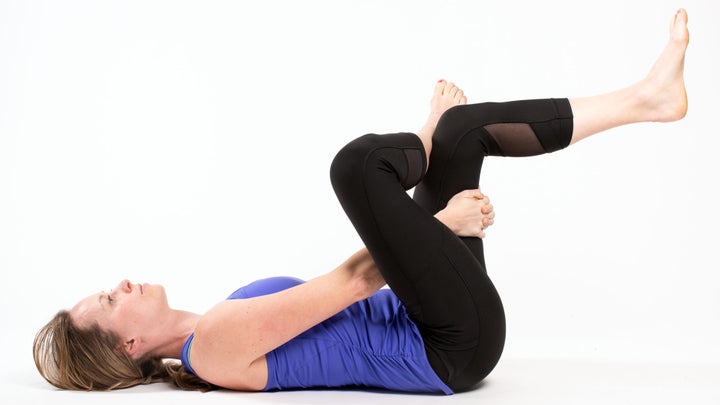
- Lie on your back with your knees bent and place one foot on the opposite knee.
- Lift the bottom leg and take hold of it around the thigh with your hands.
- Draw your bottom leg in towards your chest to stretch your outer hip muscles.
- Hold for 30 seconds while practicing your abdominal breathing from earlier.
- Repeat twice on each leg.
Physiotherapists specializing in women’s health offer highly effective, non-surgical treatments to relieve this condition and can prescribe a program of exercises tailored to your own individual needs.
Remember, it is possible to overtrain the pelvic floor and create tightness. Goodson recommends a complete core maintenance regimen that focuses on all areas rather than just one. “You want to train and get that strength back outside of running so the strength is there when you run,” she says.