Updated October 30, 2024 04:33PM
Originally posted onRUN | Powered by Outside
Kathrine Switzer and 10 Other Inspiring Women Who Have Ruled the NYC Marathon
How these female legends transformed the New York City Marathon by breaking records and barriers
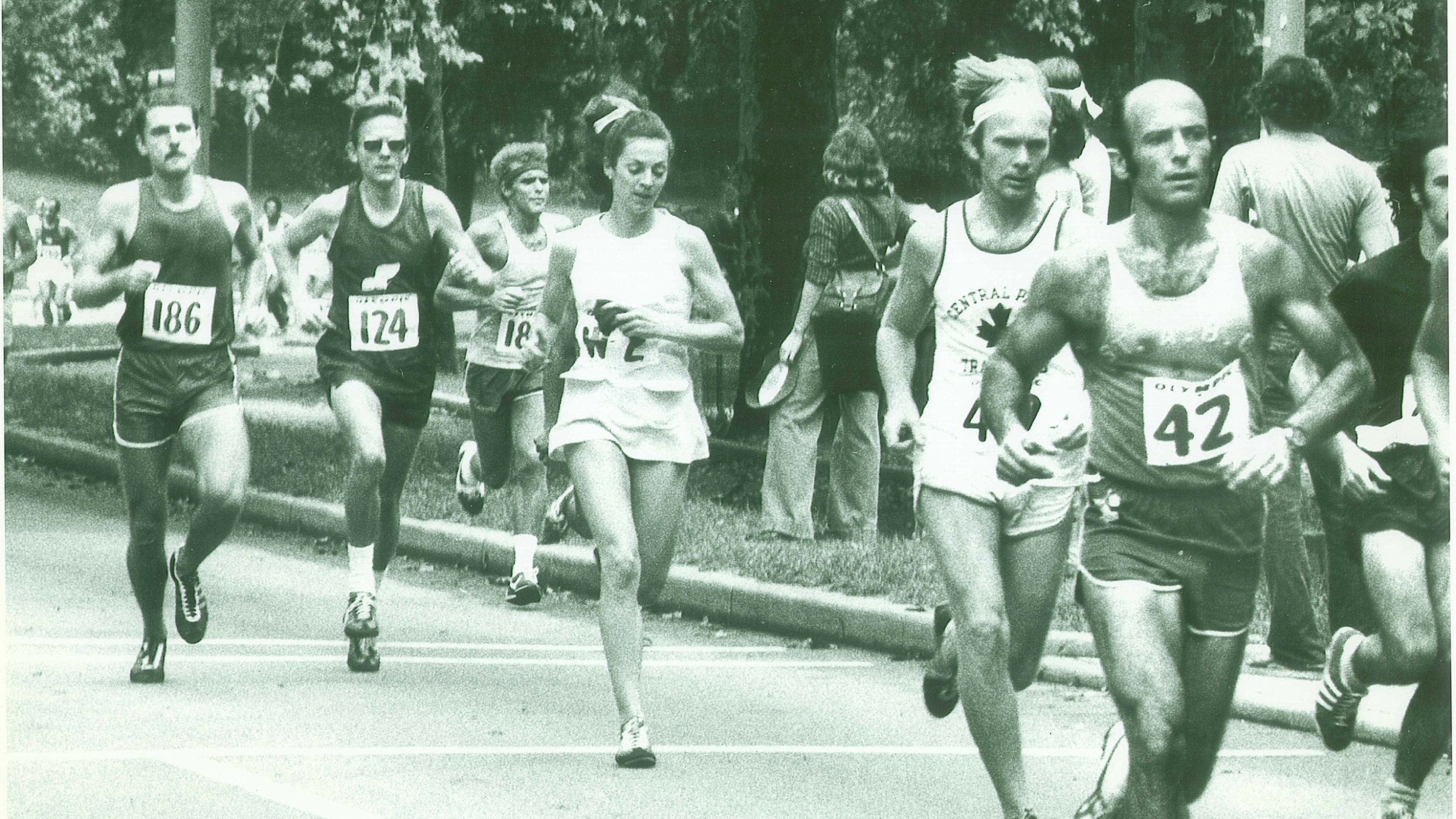
Kathrine Switzer early in NYCM in 1974. (Photo: Courtesy of Kathrine Switzer)
It was 50 years ago, but Kathrine Switzer still can feel the heat, pain, and disappointment of the 1974 New York City Marathon. Sure, she won in 3 hours 7 minutes and 29 seconds, and she won’t discount that accomplishment. But she fell short of her goal of breaking 3 hours. Now she knows this NYCM, on a day that was uncharacteristically warm and on a course that looped Central Park, was the catalyst for her next triumph.
“Sometimes the worst things lead to the best things,” she says. She broke the 3-hour mark just months later in Boston, which was perhaps fitting since that’s when her career as a professional runner and advocate for women’s rights began. Her time, a personal best 2:51:37, made her the sixth woman in the world to run a sub-3 hour marathon.
For more than five decades, Switzer has worked to provide more opportunities for women to participate in sports. From helping make the women’s Olympic marathon in 1984 a reality to the work she continues to do through 261 Fearless with girls in developing countries and refugees, her work is never done.
This year, she plans to celebrate her 1974 New York City Marathon win in style. She’ll be at the New York City Marathon making appearances all over the city. (If you’re there too be sure to join me and Switzer for a conversation on Thursday, October 31 at 4 P.M. EST at the New York City Marathon Expo’s Citizen’s Stage at the Javits Center.)
ADVERTISEMENT
Switzer’s epic accomplishments and work got me thinking about the other heroines of New York. From great athletic performances to running legends to humanitarians and sometimes all three, these 10 women are cemented in New York City Marathon history.
RELATED: Kathrine Switzer Won’t Be Stopped
The First Winner of the NYCM Women’s Division: Beth Bonner
In 1971, at just 19 years old, Beth Bonner made history by shattering two world records in marathon running. First, she completed the marathon at the Amateur Athletic Union (AAU) Eastern Regional Championships in Philadelphia in an impressive 3:01:42. Then, on September 19 of that same year, she became the first American woman to break the 3-hour barrier, finishing the New York City Marathon in 2:55:22 and becoming New York’s first winner in the women’s division and setting a new world record in the process.
The Equal Rights Advocates Nina Kuscsik and the Women of 1972
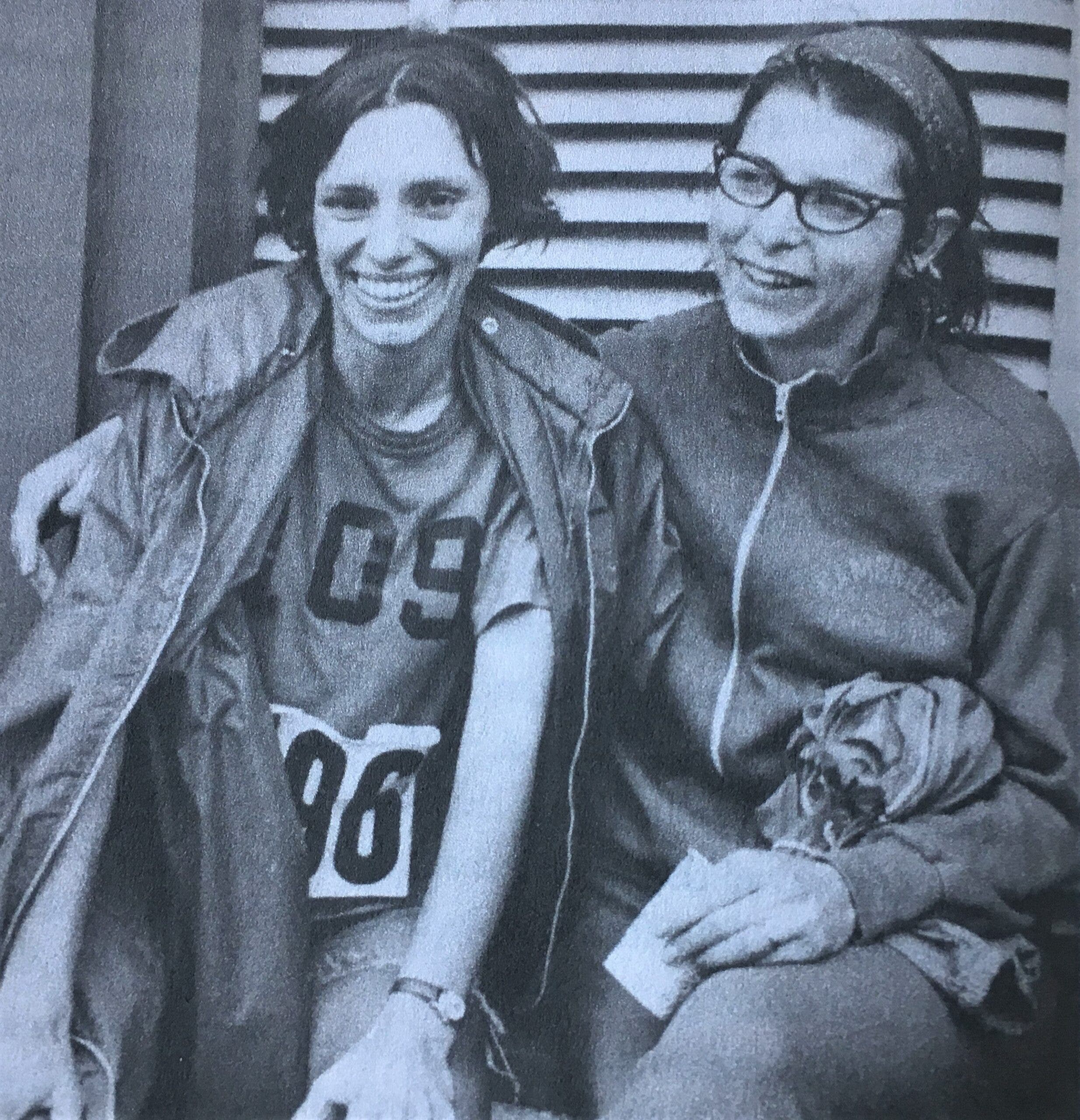
When Nina Kuscsik completed the Boston Marathon in 1969 (unofficially, as women weren’t allowed at the time), she was frustrated that her results were not counted or made publically available. In 1971, when Kuscsik became the second American woman to unofficially run a sub-3-hour marathon and her results still weren’t counted, she petitioned the AAU to end the ban on women and allow them to legally compete in long-distance races. (Prior to 1972, the longest distance women could run on the track in the Olympics was 800 meters.) In response, the AAU raised the limit on women’s events from 5 miles to 10 miles. It also said that “some women” would be allowed to run the marathon distance, but would have a separate start.
ADVERTISEMENT
This led to Kuscik, Switzer, and New York City Marathon director Fred Lebow organizing the first all-women’s road race called the Crazylegs Mini Marathon. At the 1972 New York City Marathon, Kuscik—33 at the time—led a group of eight women in protest of the separate start rule. When the gun went off, they sat down—a now iconic image in women’s running history. Once the press got the shot of the group sitting at the start line, the women got up and ran the marathon. Kuscik won and came back the following year to win again. At the AAU convention in 1972, Kuscsik, with the help of ACLU lawyers, brought a lawsuit demanding that the “separate but equal” starting line requirement be dropped, and it was.
RELATED: 13 Women Who Changed Running History
NYC’s Winningest: Grete Waitz
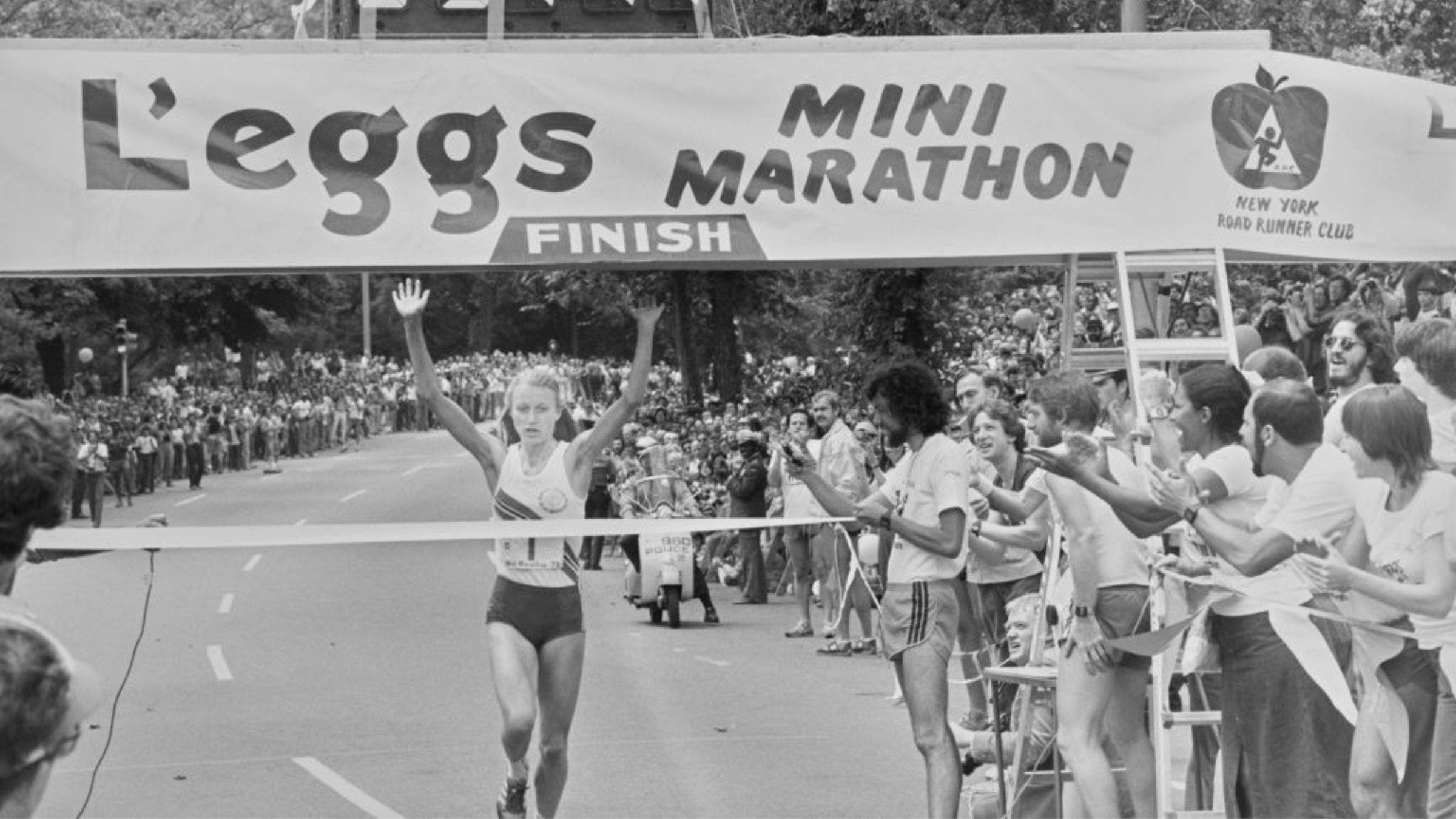
When you think of New York running heroes, Norway’s Grete Waitz tops the list. She won the New York City Marathon nine times and lowered the world record three times on her way to victory. Her marathon reign started in 1978 at the age of 24, when she made the leap from the track to the 26.2 distance. New York was her first attempt, and she not only won, but set a new world record in 2:32:30. The next year, she came back to win again and break her own record, running a 2:27:33 and becoming the first woman to break 2:30. She returned the following year and placed first with a time of 2:25:42, setting another world record. From 1982 to 1988, Waitz would win the NYCM six times. When she retired from professional running, she worked with numerous foundations and was hands-on in promoting the sport to both children and adults. Waitz died in 2011 after a long battle with cancer, but her legacy as a tremendous athlete and generous, humble, and philanthropic leader will live on forever.
The Boss: Mary Wittenberg
Mary Wittnenberg was the first woman to serve as president and CEO of the New York Road Runners and race director of the New York City Marathon. She held the position from 2005 to 2015, transforming the organization into a global brand. Wittenberg is credited with making the New York City Marathon the largest and most extravagant race in the world.
ADVERTISEMENT
Wittenberg’s passion for running began when she was at Notre Dame Law School, where she practiced with the men’s cross country team just because she wanted to run. When she took a job as a corporate lawyer in Virginia, she ran with the Richmond men’s team to train for the Marine Corps Marathon, which she won in 2:44:34. She’s an advocate for women’s sports and became a strong voice in getting women runners equal pay. She currently heads League One Volleyball (LOVB) and is working to spearhead a professional volleyball league in the U.S.
The First African Women’s Champion: Tegla Loroupe
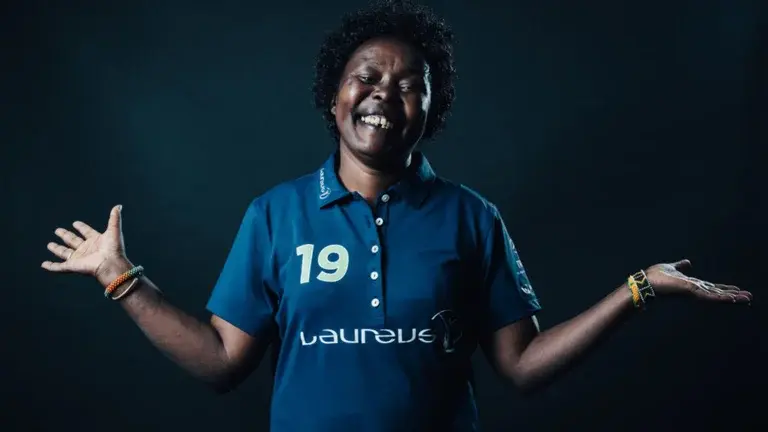
Tegla Loroupe became the first African woman to win a marathon major when she won the 1994 New York City Marathon at 21 years old. The Kenyan-born athlete then came back for a repeat performance in 1995 and continued her running domination for eight years, winning eight marathon titles in total and setting the marathon world record twice. She’s also an activist and has been recognized by the United Nations and the International Olympic Committee for the huge impact she’s had on Kenyan children through her foundation and school.
The Course Record Holder: Margaret Okayo
Kenya’s Margaret Okayo first set the New York City Marathon women’s course record in 2001, at the age of 25, with a blazing time of 2:24:21. She came back to win New York a second time in 2003 and broke her own course record in 2:22:31. It’s the course record that still stands today.
The Marathon Beast: Paula Radcliffe
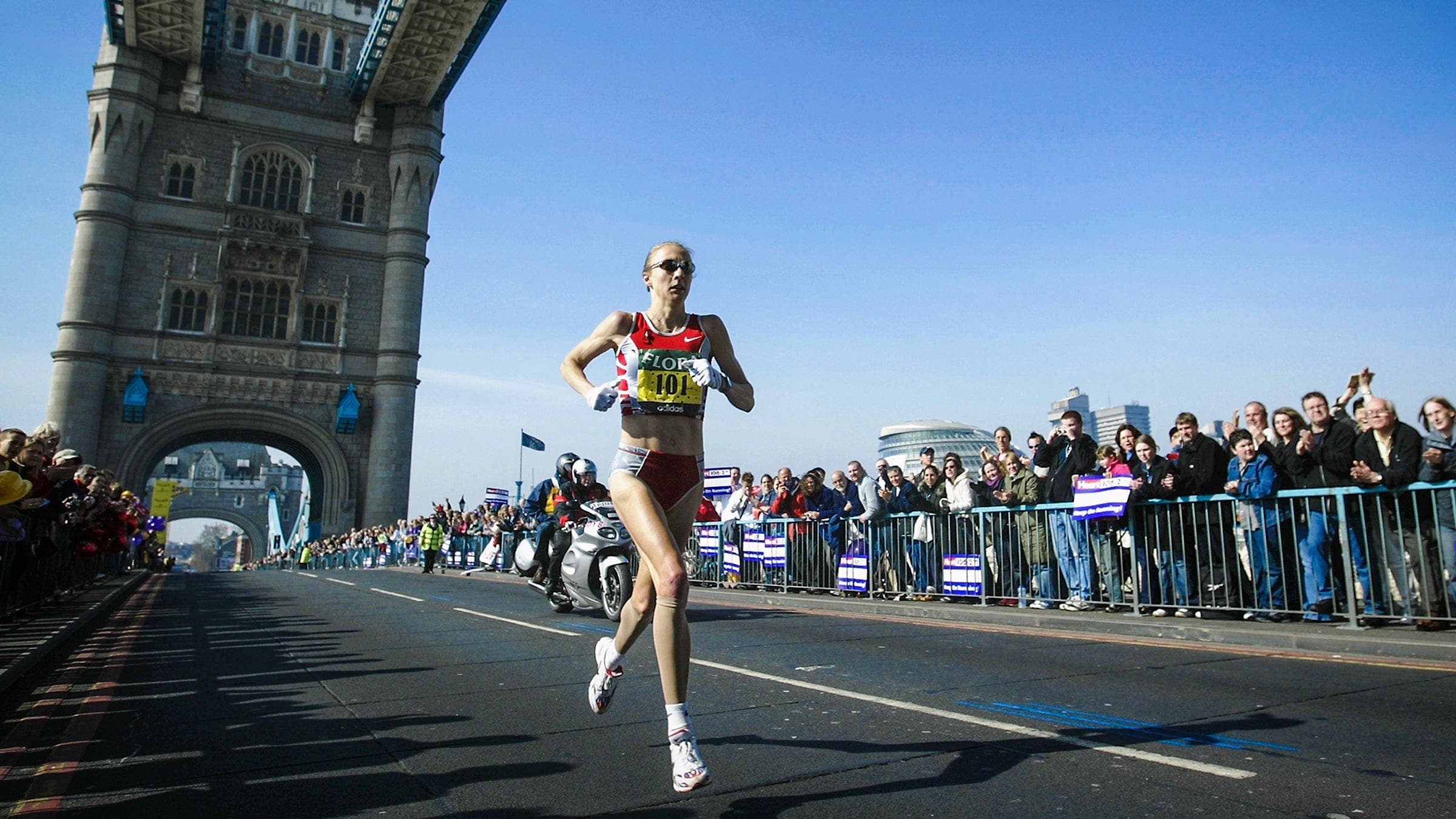
No list of women’s marathon greats is complete without Paula Radcliffe, who dominated the sport in the early 2000s. She set the first women’s marathon world record when she was 28 years old in 2002 at the Chicago Marathon (2:17:180), then blew that time away and ran a 2:15:25 in April 2003 at the London Marathon. That world record time stood until 2019. While her marks wouldn’t be quite as speedy in the notoriously challenging New York, she would rack up three wins, finishing first in 2004 (2:23:10), 2007 (2:23:09), and 2008 (2:23:56).
ADVERTISEMENT
The American Winner: Shalane Flanagan
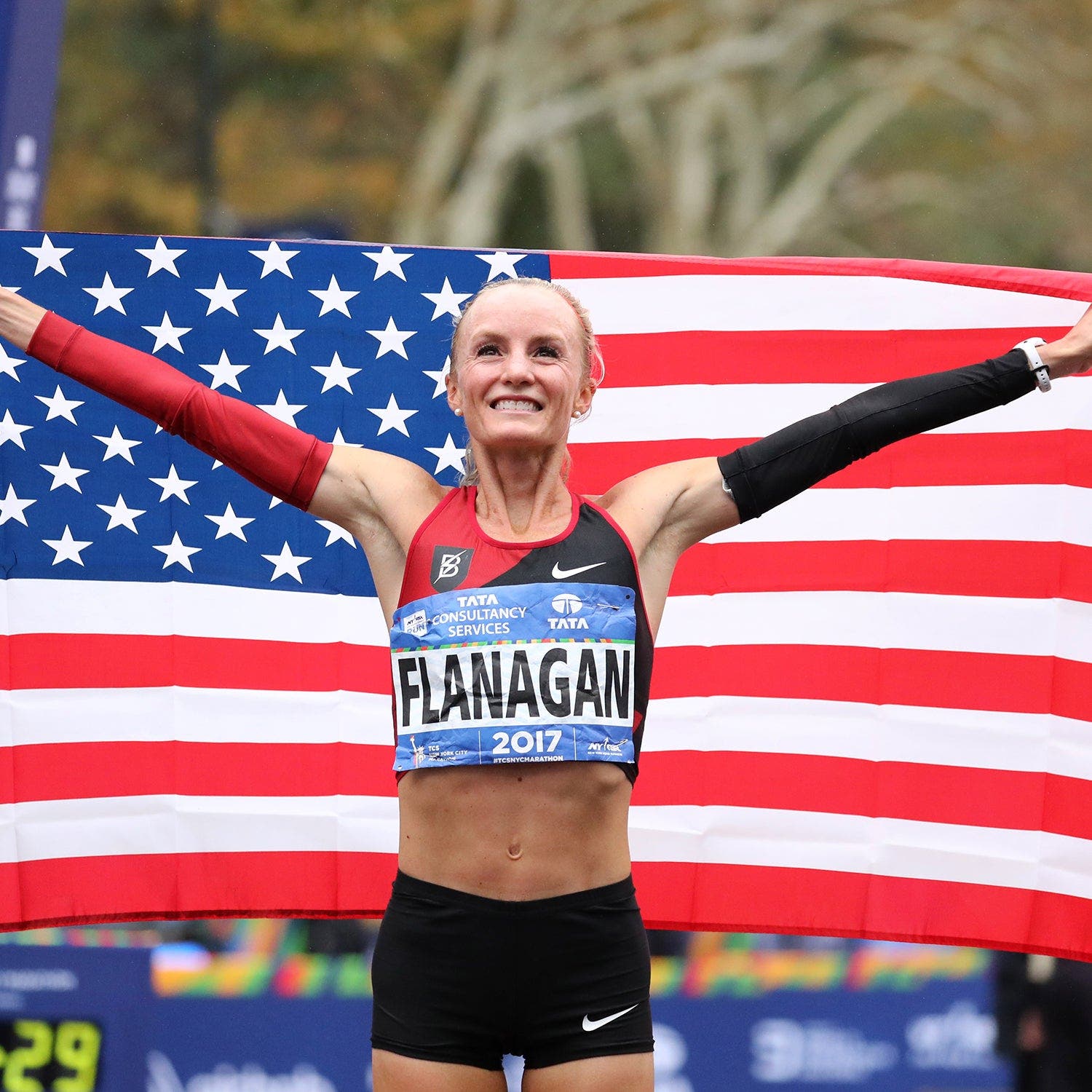
On a cloudy morning in 2017, Shalane Flanagan, who was 36 at the time and running in the last competitive race of her career, became the first American woman in 40 years to win the New York City Marathon. Running a 2:26:53 and overtaking three-time NYCM champion Mary Keitany of Kenya, Flanagan’s win shook the running world. It felt unexpected, but it really shouldn’t have been such a surprise. The two-time national marathon champion and four-time Olympian had placed second in the 2010 NYCM.She came into the 2018 race in perfect form. While she didn’t break the U.S. women’s course record—which was held by Kara Goucher from her 2:25:53, third-place finish in 2008—she was the first American woman to win the race in four decades. (Molly Seidel would later break Goucher’s course record, coming in fourth place with a time of 2:24:42 in 2021). Flanagan returned in 2018 and finished third in New York in what was the last competitive race of her career, although she did run it again in 2021 as part of Project Eclipse, in which she ran all six World Marathon Majors during a six-week span.
The Modern-Day Dominator: Mary Keitany
No one since the great Grete Waitz has dominated the New York City Marathon the way Mary Keitany has when it comes to the New York City Marathon. The Kenyan athlete owned this course from 2014 to 2018, producing a three-peat in 2014, 2015, and 2016. Then in 2017, at 35 years old, she set the women’s-only world record, winning the London Marathon with a time of 2:17:01.That year, she ran New York, but came in second to Flanagan. She returned in 2018 and ran her fastest time on the course, 2:22:48, edging close to the course record.
ADVERTISEMENT
The Five-Time Champion: Tatyana McFadden
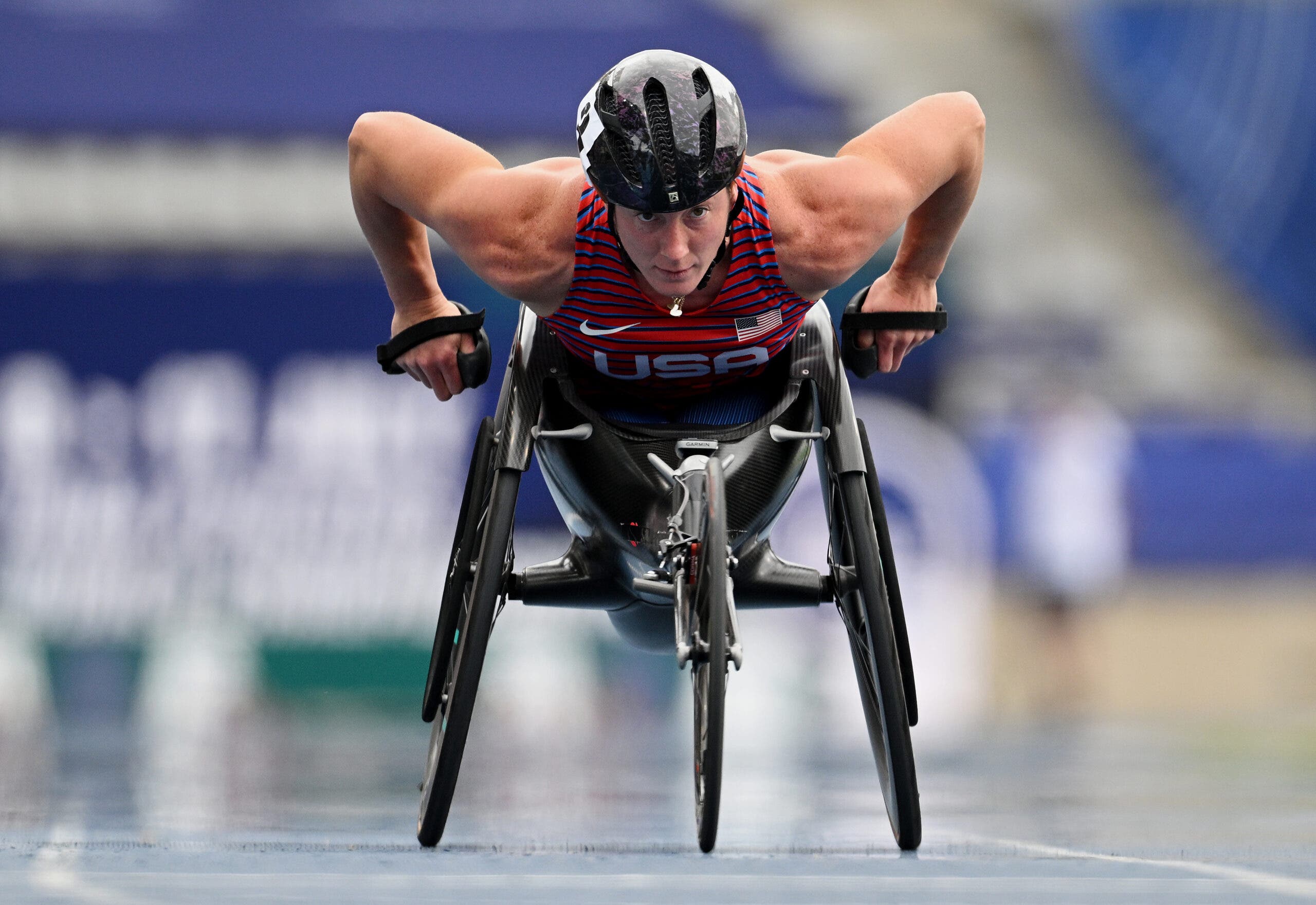
One of the greatest American endurance athletes of our time, Tatyana McFadden is a five-time New York City Marathon winner, with four of those wins being consecutive. In 2015, at 26 years old, she lowered the wheelchair course record to 1:43:04, a record that would stand until 2022. In addition to her success in New York, she’s won 20 Paralympic medals, 24 world major marathons, and four grand slams (first place in Boston, Chicago, New York and London marathons in the same year).