Published March 21, 2019 10:43AM
A Top College Runner Opens Up About Her Struggle With Amenorrhea
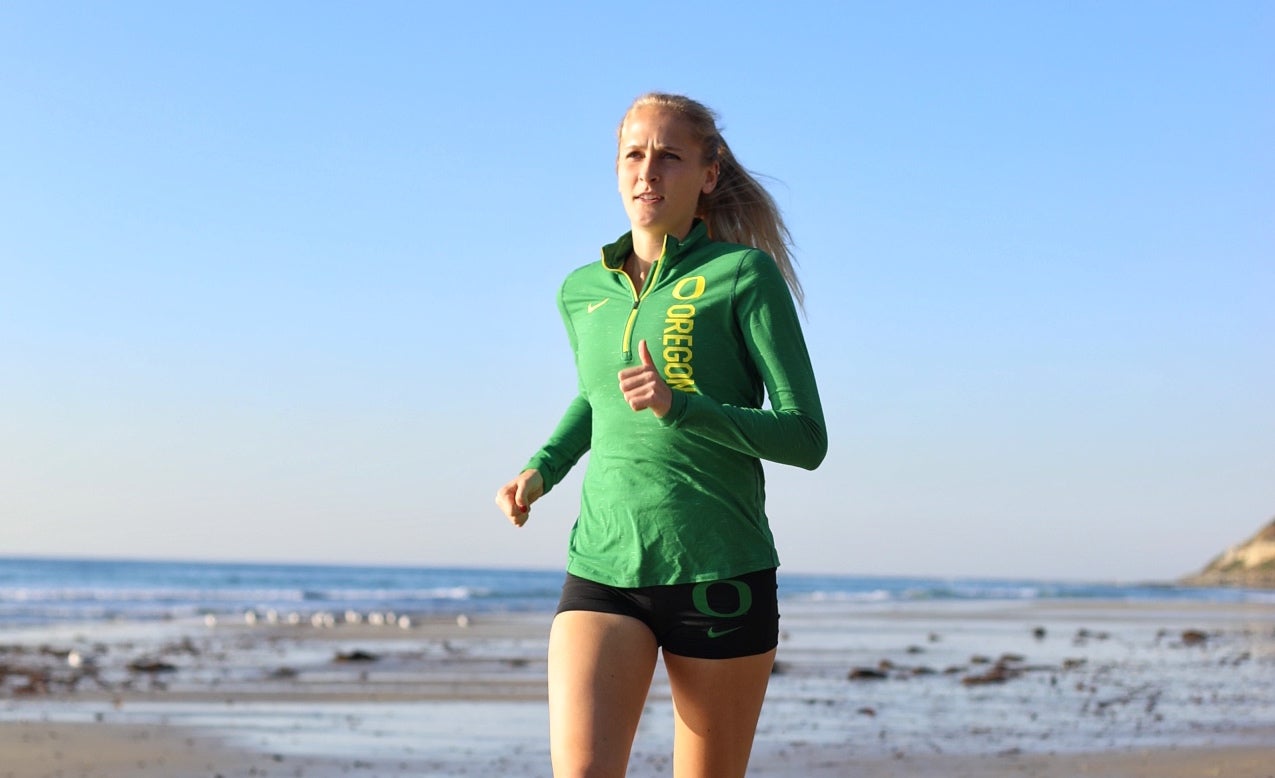
Photo: Ben Crawford Emma Abrahamson is speaking openly about her experience with amenorrhea.
Emma Abrahamson didn’t get her first period until age 22, after she stopped training. She wants other young women and girls to learn from her story.
By the time Emma Abrahamson graduated from the University of Oregon in March 2018, she had been running competitively for 11 years—three of them as a Duck, representing one of the most prestigious college track and field teams in the nation.
Her place in the storied program, where she was a member of the 2016 NCAA cross-country championship team, came as a result year-round training since she was a pre-teen. Abrahamson left her hometown of Carlsbad, California, for Eugene, Oregon, at age 18, with plenty of miles under her legs, but missing one essential rite of passage: she had never gotten her period.
ADVERTISEMENT
Typically, female athletes who experience amenorrhea (the absence of menstruation) are not consuming enough calories to keep up the expenditure from training. But for Abrahamson, it wasn’t so clear-cut. On her YouTube channel, where she began sharing her story, she said she grew eight inches and gained 50 pounds through a healthy diet during four years of high school—and was still growing when she started college. She ran about 50–55 miles per week, sometimes twice a day, which is not considered extreme for the level Abrahamson was competing.
Medical tests, however, revealed that her ovaries were still prepubescent.
Medical tests, however, revealed that her ovaries were still prepubescent.
“Although I never ran extremely high mileage, my body wasn’t given the time it needed to trigger the hormones to produce my period during puberty,” Abrahamson said, in an email to Women’s Running.
She sought the advice of an OB-GYN and was screened consistently throughout her college years for bone density and body fat percentage, which came back normal. Abrahamson was given the option to try birth control to help trigger menstruation, but opted not to do so as long as she remained otherwise healthy.
Why the concern? Amenorrhea is linked to a host of other health risks for female athletes. Women with the diagnosis are estrogen-deficient, which can lead to infertility and osteoporosis. Often, women who aren’t menstruating aren’t fueling properly, which can also indicate eating disorders. Low bone density results in stress fractures and other injuries as well.
ADVERTISEMENT
Nancy Williams, co-director of the Women’s Health and Exercise Laboratory at Penn State University, said the primary reason that avid female runners skip periods or don’t get them at all is because they’re simply not eating enough, whether it’s a conscious decision or it’s inadvertent.
“Not enough energy is available after the energy needs of training have been met for other bodily functions that are vital to health and normal functioning,” Williams said, in an email.
Coaches and parents can help young runners identify symptoms and address concerns early, so that athletes don’t suffer long term. The Women’s Sports Foundation suggests that adults encourage female runners to keep a log of their menstrual cycles and to seek help if they miss three in a row. Educate teams about nutritional requirements to properly fuel training and competition. And help create an environment that separates body image from the sport—runners are especially vulnerable to correlating weight loss with performance, which can lead to bigger health issues, including heart disease.
ADVERTISEMENT
Symptoms to watch for in young athletes include profound fatigue (yet still has trouble sleeping), consistently cold hands and feet, injuries like stress fractures, and restrictive food intake.
Abrahamson, however, never suffered a bone injury and she attributes that to her intentional meal planning and love of nourishing whole foods.
“One thing that kept my mind at ease through this entire process was that I maintained a healthy, well-balanced and calorie-dense diet,” Abrahamson said. “I was told multiple times that my ovaries were prepubescent, but after analyzing my normal hormone levels and food intake with the OB-GYN, they reassured me that I should get my period naturally once I stopped training at the competitive level.”
“One thing that kept my mind at ease through this entire process was that I maintained a healthy, well-balanced and calorie-dense diet,” Abrahamson said. “I was told multiple times that my ovaries were prepubescent, but after analyzing my normal hormone levels and food intake with the OB-GYN, they reassured me that I should get my period naturally once I stopped training at the competitive level.”
On that advice, Abrahamson continued competing throughout college without her menstrual cycle. When she left Oregon in March 2018, to take a job with a sports management company in Atlanta, she continued training for a brief time with the Atlanta Track Club, but after almost 12 years of competition, she decided it was time for a break. Abrahamson still hadn’t gotten her period and she had reached an age that provoked more concern about fertility—she wanted to become a mother one day.
ADVERTISEMENT
So she moved back to Carlsbad, dialed back her running, and started gaining weight. But as her body began changing, she began a new challenge with the way she looked. It became hard for Abrahamson to see photos of herself from college. She sought out the support of a trainer at a local gym, to gain confidence through strength training. She focused on upper-body work, which she had never done through her years of running.
“Being able to accept my body at every stage of my life is something I will continue to work on,” she said, “and it is exciting to see what my body is capable of off of the track.”
After six months of significantly reducing her running mileage, Abrahamson got her first period in February, at age 22. It brought a sense of relief, she said.
Abrahamson’s wish for all her female followers is that they’ll speak with their doctors if they are struggling with amenorrhea or related symptoms. By addressing it early, young runners can set themselves up for a future filled with many miles.
ADVERTISEMENT
“By checking up on my situation with my OB-GYN, I was reassured that I was not putting my future-self at risk,” she said. “These are issues many female runners deal with. There is a high chance many of your teammates are going through similar struggles, so don’t hesitate to talk about it.”